A columnist of heart and mind

A columnist of heart and mind
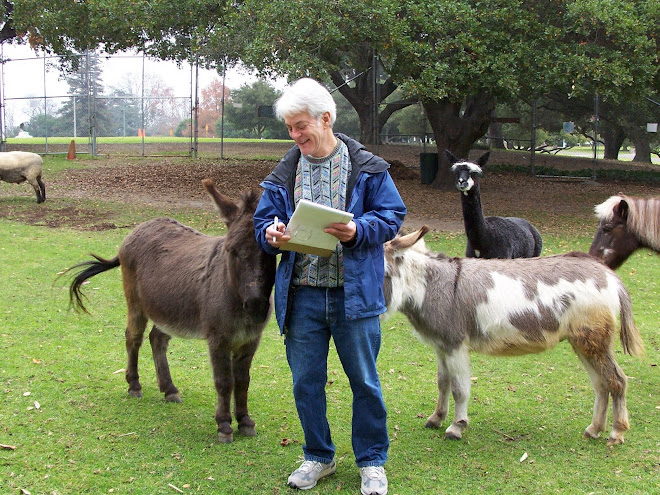
Interviewing the animals at Children's Fairyland in Oakland. L-R: Bobo the sheep, Gideon the miniature donkey, me, Tumbleweed Tommy the miniature donkey, Juan the alpaca, Coco the pony

Friday, February 3, 2012

Stupor Bowl


It's Super Bowl weekend, and the tension has been building for weeks.
Not about who's going to win, but about what's going to be the dumbest media question.
The reporters will have a tough time matching the standard set in 1981, when someone asked Raiders quarterback Jim Plunkett, whose parents were disabled, "Lemme get this straight, Jim. Is it blind mother, deaf father? Or the other way around?"
Or 1988, when Doug Williams of the Redskins, the first African American quarterback to start (and win) a Super Bowl, was asked, "How long have you been a black quarterback?"
Or that divine moment in 2000 when a reporter asked Titans defensive end Jevon Kearse about the religious symbol dangling from his neck, "What's the significance of the cross?"
The name Super Bowl, of course, is a misnomer. There's nothing super about this year's teams, the Pats and Giants, who were lucky to escape from their respective conference championships by the skin of their teeth.
What makes the game unique is that it's the only time of the year when the whole country comes to a dead stop and watches the same TV show.
Back in the days when there were only three networks, shared experiences like this used to happen all the time. Television was the great national campfire that we all gathered around every night.
We all watched the Beatles make their debut on the Ed Sullivan show. We all watched Tiny Tim marry Miss Vicki on the Johnny Carson show. And we all watched Chuckles the Clown's funeral on "The Mary Tyler Moore Show."
That gave us something in common to talk about around the water cooler the next day. But no longer, thanks to the huge explosion in the number of TV channels. I don't watch what you watch, and vice versa. There are just too many choices.
But we'll all be watching the Super Bowl on Sunday.
Never mind that the game is usually a blowout well before halftime. Never mind that the halftime show features canned performances by geriatric cases - like the Stones, the Who and, this year, Madonna - whose best years were behind them decades ago.
The important thing is that we'll all be doing it together. And unlike the old holidays, like Thanksgiving and Christmas, we'll be doing it with people we like, not with people we're stuck with because we're related to them.
Like it or not, the holidays we grew up with are soooo 20th Century. Nobody takes Labor Day, Memorial Day, Veterans Day or even July 4th seriously any more.
Once upon a time they were celebrated with parades, picnics, ceremonies and solemn remembrances. Today, they're just an excuse for a three-day weekend.
But the biggest change between then and now isn't the game; it's the fans.
Twenty-one years ago, when Buffalo Bills kicker Scott Norwood missed a last-second field goal that would have won Super Bowl XXV, he was showered with condolences from Bills fans.
Today, 49ers kick returner Kyle Williams, who made a couple of flubs in the NFC championship game, is being subjected to a flood of hateful tweets from so-called fans, including "I hope you get cancer," "I hope you get AIDS," and "I hope you, your wife, your kids and your whole family die."
These losers don't care that he had suffered four concussions, or that the Giants knew this and deliberately tried to hit him in the head, or that he didn't use this as an excuse.
He has nothing to be ashamed of. But they do. Are their lives really so empty? I hope the 49ers track them down - it shouldn't be hard to do - and ban them from home games for life.

Monday, January 23, 2012

Do That Crazy Hand Jive!


Berkeley - and the world - lost a giant of rhythm and blues when Johnny Otis died on Jan. 17, just two weeks after his 91st birthday.
It would take 10 columns to list all his accomplishments. But here's a short list of some of the musical legends he discovered: Jackie Wilson, Hank Ballard, Big Mama Thornton, the Robins (who later became famous as the Coasters), Esther Phillips (whom he billed as "Little Esther") and the great Etta James, who, sadly, died three days after he did.
When he was inducted into the Rock'n'Roll Hall of Fame in 1994, Etta called him "my guru."
Johnny produced and played drums on Big Mama Thornton's original (and still the best) version of "Hound Dog," wrote "Every Beat Of My Heart" for Gladys Knight and the Pips, and played several instruments on Charles Brown's classic "Driftin' Blues."
In 1958 he had a Top 10 hit of his own with "Willie And The Hand Jive," the saga of "a cat named Way-Out Willie" who had "a cool little chick named Rockin' Millie," sung to the distinctive "shave-and-a-haircut-two-bits" rhythm pioneered by Bo Diddley.
The son of Greek immigrants, Johnny was born Ioannis Alexandres Veliotes on Dec. 28, 1921, and grew up in the largely African American section of Southwest Berkeley.
It didn't take long for young Ioannis to fall in love with everything about black culture, especially the music. And he made a conscious choice to live his life, both personally and professionally, as an African American.
He shortened his name to Johnny Otis and never looked back.
"Genetically, I'm pure Greek," he told the San Jose Mercury News in 1994. "Psychologically, environmentally, culturally, by choice, I'm a member of the black community."
Keep in mind that when Johnny was growing up, Berkeley was still rigidly segregated. If you were black, you didn't dare venture into certain sections of town after dark. Heck, Berkeley didn't desegregate its schools until 1968!
But though African Americans were geographically relegated to the flatlands, they had the peace of mind that comes with occupying the moral high ground. And Johnny found that very attractive.
Although he never stopped performing - often playing with his children and grandchildren - more and more of his energy was spent on issues of civil rights and social justice.
He served as chief of staff for Mervyn Dymally, California's first black Lieutenant Governor, and ran unsuccessfully for state senate. (He probably would have won if he hadn't insisted on listing his real name on the ballot instead of "Johnny Otis.")
In 1968 he wrote his first book, "Listen to the Lambs," about the Watts riots. In the 1970s he became an ordained minister and, although he joked about being "Reverend Hand Jive," he took his ministry seriously and devoted a lot of time to feeding and sheltering the homeless.
I had the honor of interviewing him once during the 1980s. We had lunch at Mel's Diner - his treat - and he couldn't have been nicer. He was a truly humble guy who took his music seriously, but not himself.
And he was the first to acknowledge that he wasn't even the most famous member of the Veliotes family. That distinction goes to his little brother, Nick - aka Ambassador Nicholas Veliotes, perhaps the most distinguished American diplomat of his generation.
Nick was Jimmy Carter's ambassador to Jordan and Ronald Reagan's ambassador to Egypt. In fact, wherever there was a hot spot, presidents of either party would send Nick there to cool things down. He had a knack for bringing people together.
Come to think of it, so did Johnny.

Monday, January 16, 2012

Happy twenty-twelve!


OK, now that we're in the year 2012, could we please call it by its right name?
Not "two-thousand-twelve," but "twenty-twelve."
I know we're in a brand-new millennium, so I've kept quiet for more than a decade while people persisted in saying, "two-thousand-one," "two-thousand-two," and so on.
But don't you think it's time we got over it? This nomenclature is getting more awkward with each passing year.
Just imagine what a pain it's going to be a hundred years from now. Do we really want our descendants struggling with "two-thousand-one-hundred-twelve" instead of "twenty-one-twelve?"
This problem never cropped up during the last millennium. When our ancestors talked about the year of the Declaration of Independence, they said, "seventeen-seventy-six," not "one-thousand-seven-hundred-seventy-six."
Pearl Harbor was attacked in "nineteen-forty-one," not "one-thousand-nine-hundred-forty-one." And JFK was killed in "nineteen-sixty-three," not "one-thousand-nine-hundred-sixty-three."
The rot started back in 1968 (note: "nineteen-sixty-eight," not "one-thousand-nine-hundred-sixty-eight"), when the classic sci-fi flick, "2001: A Space Odyssey," was released.
To the day he died, Arthur C. Clark, the guy who wrote the screenplay (and the novel on which it was based), kept insisting it should be pronounced "twenty-oh-one," not "two-thousand-one," but nobody listened to him. And a bad habit began.
By the time we got to 2000, we were already conditioned to say "two-thousand." It was short and convenient.
But the name has been getting more awkward with each passing year. Now I wince every night when I turn on "The Daily Show" and hear the announcer intone, "January twentieth, two-thousand-twelve."
I'm probably a lonely voice crying in vain, but mark my words: If we don't wise up soon, we're all going to end up with twisted tongues.
And as long as I'm playing language cop, here's a wag of the finger to Rick Perry, who said in a in a recent GOP presidential debate that Iran would invade Iraq "literally at the speed of light."
Sorry, Rick. According to Newton and Einstein, nothing travels "literally" at the speed of light except light itself. (Of course, he's skeptical about Darwin's theory, so maybe he doubts Newton and Einstein, too.)
The word Gov. Perry was searching for is "figuratively," which the Oxford English Dictionary defines as "not literally."
Another bugaboo of mine is "disinterested," which is incorrectly used to mean "uninterested" - i.e., apathetic.
This really sets my fillings on edge because "disinterested" is such a great word in it own right. It means "fair" or "impartial" - i.e., that you don’t have a personal or financial interest in the outcome.
In other words, a good judge should never be uninterested in the trial, but she should always be disinterested.
But my number one pet peeve is "issue," which people use as a synonym for "problem" - as in "I have an issue with that" or "He has some health issues."
No, no, no! An issue is a topic at the heart of a debate, not a difficulty.
A broken leg is a health problem. The president's medical insurance reform is a health issue. See the difference?
One of the beauties of the English language is that it's always changing to reflect current usage. So all these incorrect words probably will become standard English through sheer repetition, just as "like" has become a synonym for "as."
(Oh for the days when "Winston tastes good like a cigarette should" triggered angry letter writing campaigns! For that matter, oh for the days when people still wrote letters!)
But until that happens, please don't use "issue" when you mean to say "problem." I have an issue with that. :-)

Monday, January 9, 2012

Too Much Happiness!


One of the real treasures of the Bay Area - right up there with Chez Panisse, the cable cars and the Golden Gate Bridge - is The Lamplighters, the world's best Gilbert & Sullivan troupe.
That distinction used to belong to England's D'Oyly Carte Opera Company, which was founded in 1878 by Gilbert and Sullivan themselves with their producer, Richard D'Oyly Carte.
But the D'Oyly Carte company went belly-up in 1982, and since then The Lamplighters have taken their place at the top of the heap.
My evidence? Well, whenever The Lamplighters travel to Buxton, England to compete in the annual International Gilbert & Sullivan Festival, they win first prize.
In 1997 the festival organizers tried an experiment: Since The Lamplighters are so good, they figured the Bay Area must be a hotbed of Gilbert & Sullivan enthusiasm. So that year they held the festival here in Berkeley on the Cal campus.
I was in hog heaven. I live only a few blocks from campus, so I got to see Gilbert & Sullivan companies from all over the world performing morning, noon and night.
But it was almost embarrassing how much better The Lamplighters were than everyone else
Remember when I was complaining last week that some singers simply "park and bark?" That's not what The Lamplighters do.
Yes, the singing is spectacular, but that's just the beginning. A Lamplighters production is more than a staged concert; it's a full-blown theatrical performance.
You know, with actors actually acting instead of standing around, waiting for their turn to sing. Better yet, you can even understand the words.
And that's important, because part of the charm is the way Gilbert used his rapier wit to skewer the sacred cows of Victorian society.
"The Mikado" is an attack on capital punishment. "HMS Pinafore" is about the cruelty of the British class system. "The Pirates of Penzance" is a devastating indictment of the stupidity of war. Comedy isn't funny unless there's hard truth behind it.
But instead of getting all preachy on you, Gilbert always couched his messages inside the most glorious nonsense. As their contemporary, Oscar Wilde, observed, "If you want to tell people the truth, make them laugh, otherwise they'll kill you."
In Gilbert & Sullivan the whole is greater than the sum of its parts, and Gilbert's words are even sharper when they're set to Sullivan's ravishingly lush music.
Not for nothing was Sullivan called "the English Mozart." Exquisite melody after exquisite melody flowed effortlessly from his pen. And they're even more beautiful when set off by Gilbert's deliciously tart lyrics. The net effect is sweet and sour on steroids.
The Lamplighters are celebrating their 60th anniversary, and they're kicking off the year next weekend with a sparkling new production of my favorite, "The Gondoliers," a political satire that was Gilbert and Sullivan's last great masterpiece before they finally split up for good.
(Unfortunately, despite their enormous success they cordially detested each other. They split up many times over the years, only to be talked into giving it another try by Carte, who was understandably reluctant to kill a goose that was laying golden eggs.)
"The Gondoliers" will have three performances at the Novellus Theater at Yerba Buena Center for the Arts in San Francisco next weekend: Friday, Jan. 20 and Saturday, Jan 21 at 8 p.m., and a Sunday matinee on Jan. 22 at 2 p.m.
The following weekend, the show will move to the Lesher Center for the Arts in Walnut Creek: Friday, Jan. 27 and Saturday, Jan 28 at 8 p.m., with a Sunday matinee on Jan. 29 at 2 p.m.
As Tessa (or is it Gianetta? I can never remember which one) says in Act 2, "O, it's too much happiness!"

Thursday, January 5, 2012

Sweet Sounds


It's 6:30 a.m. The alarm clock won't ring for another hour and a half, but 27-year-old mezzo-soprano Jennifer Panara is already awake, thinking about all the things she has to do that day.
At 9 a.m. she's at The Musical Offering, a delightful café/music store in Berkeley where she works as assistant manager. (Hint: Don't miss the Caesar salad. Best in town.)
But that's just her day job. By mid-afternoon she's rushing down to Mountain View, where she'll rehearse with pianist Elena Lavina for a recital of songs by Faure, Debussy, Barber and Schumann that they'll present this Sunday in Palo Alto.
Then it's over to San Francisco for a round of auditions that last until 10 p.m., when her husband, Sascha Gerhards, a PhD student at UC-Davis who shares her love of heavy metal - He took her to a Metallica concert on their first date - picks her up at BART.
The next day she works the 8-to-4 shift at the café, then she races to Livermore for a rehearsal of Gounod's "Romeo et Juliette," which she'll perform with the Livermore Valley Opera next September.
And the days after that are just as hectic. Such is the life of a rising young singer who the music critics say someday will be on a par with her heroes Fredericka Von Stade, Marilyn Horne and Anne Sofie von Otter.
After a recent performance of Mahler's Symphonies No. 3 and 4 with the Philharmonischer Chor Bonn in Germany, one critic called her "a mezzo-soprano of immense brilliance and versatility," while another praised her "virtually ideal tone, flawless interpretation and tender voice."
But what the audience never suspects is that each time she performs, she has to conquer a terrible case of stage fright that has tormented her ever since she was a little girl.
"I'd get anxiety attacks and red in the face," she says. "I was always so nervous that people would ridicule me."
So what gets her over it? The music itself.
Before singing a new piece, she studies obsessively to find out everything she can about it, including watching videos of other singers performing it, looking up the historical context of the plot, and filling notebook after notebook with notes.
Then, when she finally steps out on stage, she tries her best to forget it all.
"You do your best with the musical skills you've honed, and what the composer has given you, and what you've learned working with your colleagues. But when it comes down to it, my best moments have been when I really let go and become a slave to the music," she says.
"I'm not the kind of person who throws caution to the winds in other areas of my life, but doing so when I'm performing has given me confidence and abated my stage freight. But it's necessary to perform organically in the moment. And that's easier said than done."
Some singers just walk on stage, ignore the other musicians and belt out their aria - known in the trade as "park and bark" - but Jennifer thinks they're missing half the fun.
"Music is most enjoyable when it's a collaboration, and that brings me to our recital. Elena is a great collaborator. She doesn't just play, she listens. And that's easier said than done, too."
The recital will take place at 3 p.m. Sunday at the Oshman Family Jewish Community Center, 3921 Fabian Way in Palo Alto.

Thursday, December 29, 2011

New Year's Eve? Bah, humbug!


Remember when I was talking last week about how much I love Christmas?
That's how much I hate New Year's Eve. When the clock strikes midnight, I plan to be fast asleep.
Spare me the sight of those drunken revelers at Times Square screaming their heads off for what is basically a non-event.
VE Day I can understand. VJ Day I can understand. Ditto for election night 2008 and the death of Osama Bin Laden. All of them were real events, and well worth celebrating.
But New Year's Eve is just turning a page in the calendar. What's the big deal?
Besides, until 400 years ago there was no consensus that January 1 should be the beginning of the year. During the Middle Ages, New Year's Day was all over the place: March 25 in England, Easter Sunday in France, and Christmas Day - celebrated on December 15 - in Italy.
When you think about it, January 1 doesn't make much sense. The logical time is spring, when the flowers are blooming, the animals are bearing their young and the farmers are planting their crops. New year, get it?
And that's the way it was for centuries, since the dawn of recorded history. It never occurred to anybody that January 1 might be a good day to begin the year.
So what changed it? Politics.
Back in ancient Rome, the politicians kept fiddling with the calendar, adding several days to each month to extend their terms in office. By Julius Caesar's time, calendar dates were so out of whack with their astronomical benchmarks, he had to let the year 46 B.C. drag on for 445 days to reset the calendar. He began the next year with January 1. (And while he was at it, he named a month - July - after himself.)
Unfortunately, coming so soon after Christmas, New Year's is a huge anticlimax.
Christmas is warm and fuzzy. New Year's Eve is cold and glitzy. Christmas is giving gifts and making children happy. New Year's Eve is drinking and forced bonhomie.
Christmas is about being with the people you love. New Year's Eve is about the haunting fear of being alone. So we distract ourselves by making noise and embracing total strangers.
And who says the next year will necessarily be any better than the last one? It rarely is, and next year doesn't show any signs of being an exception.
We're going into a presidential election year, and I truly fear where the bitterness of the last three years is going to take us.
But there are a few hopeful omens. The retailers had a better Christmas than expected, and charitable giving was also up.
And I'm encouraged by the emergence of the Millennial generation as a political force, although I hope they'll learn from the mistake my generation made in the 1960s and not allow their movement to be hijacked by violent thugs like the Weathermen and the Simbionese Liberation Army in my day or the black-masked anarchists of today.
So, against my better judgment, I'm going to keep my fingers crossed and trust that we can still rise above our recent history and come together for the sake of our country.
Then it really will be a happy new year.
I hope your 2012 is a healthy, happy and prosperous one. And as Mark Twain observed, "Now is the accepted time to make your regular annual good resolutions. Next week you can begin paving hell with them as usual."

Sunday, December 18, 2011

Merry Christmas


(Above: A scene from El Cerrito's annual Christmas display, created by the late Sundar Shadi - another non Christian who loved Christmas)

What do "White Christmas," "Rudolph The Red Nosed Reindeer, "Silver Bells," "I'll Be Home For Christmas," "Sleigh Ride," "Winter Wonderland," "A Holly Jolly Christmas," "Rockin' Around The Christmas Tree," "It's The Most Wonderful Time Of The Year," "Let It Snow! Let it Snow! Let it Snow!" and "You're A Mean One, Mr. Grinch" have in common, aside from the fact that they're Christmas songs?
Answer: They all were written by Jews.
Now, that might seem anomalous to some, but not to me. Christmas has been my favorite holiday since I was a little kid, and I'm a Jew through and through.
And it's not because of the presents. We get them at Hanukkah, which usually occurs around the same time, as it does this year, so that's a wash.
No, the real attraction is the Christmas story itself. Think about it: How many other holidays feature a child as the hero? That's something any kid can identify with.
And even when I was little, I could still appreciate the delicious irony: If only those smug innkeepers knew whom they were turning away!
Now, that story can cut both ways. Cynics might take the moral to be: Before you slam the door in someone's face, make sure they aren't well-connected.
But I prefer to look at it the other way: God is in everyone, so showing kindness to anyone is showing kindness to God him/herself.
I saw a little girl being interviewed on television the other night as she was delivering Christmas cookies to some homebound old people. The reporter asked her what Christmas is all about, and she said, "Being nice to somebody."
Exactly. And that's why Christmas is my favorite holiday.
Mind you, it hasn't always been easy. When I was young, I looked forward to the annual Christmas pageants at school, especially singing those gorgeous Christmas carols like "The Holly And The Ivy," "O Holy Night," and my favorite, "Once In Royal David's City."
But I dreaded the ethical dilemma I would confront whenever we got to the words "Christ the Lord."
What to do? I was sure lightning would strike me dead on the spot if those words passed my lips. On the other hand, no little kid wants to stick out from the crowd.
So I finessed the problem the only way I could think of: I lip-synched.
But otherwise, I embraced all the symbols and trappings of the holiday.
I loved those merry gentlemen, who come to us from England; good King Wenceslas, who comes from the Czech Republic; the Christmas tree, which comes from Germany; and, of course, Santa Claus, who comes from Turkey by way of the Netherlands, then was re-invented in the 19th Century by two Americans - poet Clement Clark Moore, who wrote "A Visit From St. Nicholas" (which begins, "T'was the night before Christmas…"), and cartoonist Thomas Nast, who also came up with the Republican elephant and the Democratic donkey.
And the more recent additions to Christmas lore, like Rudolph and Frosty? Meh. They couldn't carry Santa's sack.
But whatever your religion - or even no religion at all - let me wish you joy this holiday season.
"And so I'm offering this simple phrase/To kids from one to ninety-two/Although it's been said many times, many ways/A very Merry Christmas to you."
Those words from "The Christmas Song" (aka "Chestnuts Roasting On An Open Fire") were written by Mel Torme and Bob Wells.
Two Jewish guys, of course.