A columnist of heart and mind

A columnist of heart and mind
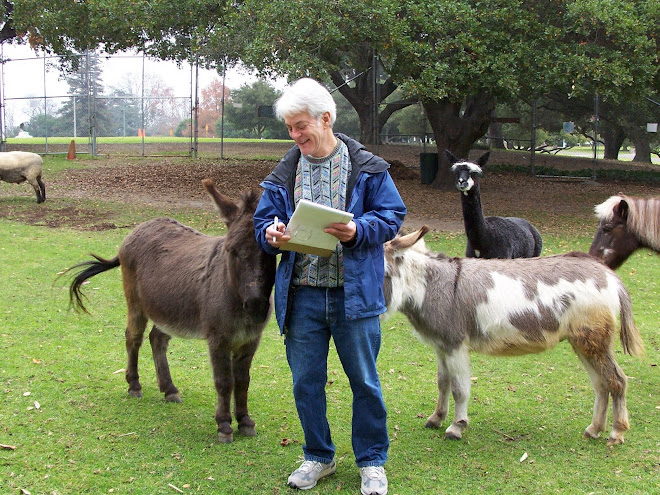
Interviewing the animals at Children's Fairyland in Oakland. L-R: Bobo the sheep, Gideon the miniature donkey, me, Tumbleweed Tommy the miniature donkey, Juan the alpaca, Coco the pony

Monday, August 16, 2010

Thumbs Up For A Gentle Man


It was with mixed emotions that I watched the final program of "At The Movies," which ended its television run on Sunday after 45 years.
I couldn't help thinking, "I wish Gene Siskel were still here."
Gene was one of the guys who founded the show, and he was my friend. (We were in the same class in college.)
In 1975 he was the film critic for the Chicago Tribune, and a producer at the local PBS station named Thea Flaum got the brilliant idea of pairing him with his rival critic from the Chicago Sun-Times, Roger Ebert. For a half hour each week, they'd argue about the movies and give each film a thumbs up or thumbs down.
The show was an instant hit, and no wonder: Gene and Roger were the original odd couple.
I'm hopelessly biased, but I think Gene usually got the better of the argument. He championed films that appealed to the mind and heart, and occasionally other parts of the body.
The most honest review I've ever heard anyone give is the thumb's up he gave to the soft-core French film, "Emmanuelle."
Instead of tiptoeing around the truth by talking about the cinematography or lighting, he looked into the camera, shrugged his shoulders and said sheepishly, "What can I say? It turned me on."
For me, the most memorable review is the one he gave to another French film, "Rififi," which depicts a jewel robbery, moment by moment. He said the reason it's so exciting is that we love to see the behind-the-scenes details of how people in exotic professions do their jobs. And what profession could be more exotic than jewel robber?
It's a lesson I've applied to everything I write. Whenever I interview someone, I always ask them to describe the details of how they do what they do. Thank you, Gene.
I'd run into him whenever he and Roger came into town on a promotional tour, and what most impressed me is that he never thought of himself as The Famous Gene Siskel.
He treated everyone, down to the go-fer who brought him a cup of coffee, with complete respect. He was a true gentleman, and you don't find that very often, especially among celebrities.
Gene died from a brain tumor in 1999, and Roger carried on with a succession of co-hosts until he, too, got sick and had to retire in 2008. For the last few years the show has been hosted by a series of critics who are very good, but not in Gene's league.
At our 25th college reunion, Gene passed on some precious wisdom he received from the master of his residential college, novelist John Hersey, and I'm passing it on to you:
"1. Don't do anything for money. In America if you do anything well, money will follow - if you want it."
"2. Have more than one career. Don't be trapped into working for one company or in one profession for your entire life."
"3. Don't view life as a test on which you can get a perfect score. Life is problems. Therefore, don't be unhappy when you're unhappy. Strive for and appreciate moments of serenity, a much more reasonable goal."
P.S. The last movie Gene reviewed was a romantic comedy called "Simply Irresistible." He gave it a thumbs down.

Monday, August 2, 2010

25 Years of Yum!


From the moment Lalime's opened 25 years ago, it shot to the top tier of Berkeley restaurants, which is really saying something considering that Berkeley is a town where people take their food as seriously as they take their politics.
Its loyal patrons come from all over the Bay Area, and its popularity has spread even farther as Cal professors on sabbatical at other colleges spread the word.
(There's a sign on the bulletin board in the faculty dining room at MIT saying, "When you're in Berkeley, be sure to eat at Lalime's." Ditto for the Los Alamos National Laboratory in New Mexico.)
I hadn't been there in a while, so when Lalime's held a 25th birthday party a couple of weeks ago I went to see if it was as good as I remembered.
Answer: No, it wasn't. It was better.
But don't take my word for it. Ask KCBS food maven Narsai David, who regularly dines there with his wife, Venus.
"We love Lalime's because of the wonderfully mellow environment and the friendly attitude of the staff," he told me. "But, of course, the most important thing is the creative presentation of the best contemporary cuisine."
But Lalime's has always had another role: as a local hangout for the folks who live in Berkeley's Westbrae neighborhood.
"There's this great big picture window, and as you walk by you can see the people dining there," said Marshall Platt, who lives down the street. "And when I dine there, I can see the people walking by. It's part of the fabric of Northwest Berkeley. Plus, it's very affordable, especially for what it is."
So how do owners Haig and Cindy Krikorian - Lalime is Cindy's maiden name - manage to juggle these dual roles?
"The answer is that we don't feel like a Top 10 restaurant, and we never have," said Cindy. "We just want to serve good food to our friends."
It all starts with local food, seasonally produced. That's a staple of California cuisine, but Haig learned this long before it became fashionable, when he was growing up in Lebanon.
"The Bay Area gives you so many food choices, it would be incredibly stupid not to take advantage of that," he said. "If the tomatoes aren't good that day, you don't serve a dish that requires tomatoes."
But the person who really set the standard was Haig's mother, Nevart. Almost up until the day she died last year at 87, she was the restaurant's official napkin folder - she didn't trust anyone else do it precisely enough - garlic peeler and produce buyer.
"She was totally in charge," said general manager Michael Hutchings as his baby daughter, Eloise, played underfoot. "She was like a second mother to me. I called her Nene, which is Armenian for 'grandmother.'"
Eloise is the latest in a long line of employees' children who have grown up at Lalime's, as have Haig and Cindy's own kids.
The extended family also includes patrons such as Chester Zinn, whose regular table, Table 18, has a silver plaque to commemorate his 100th birthday, Raider great Raymond Chester, and the physics department at Cal, who named a new scientific theory "Lalime's Theory."
"Haig has finally found a way to entertain all his friends," said Richard Mazzera, owner of Cesar's restaurant. "And he doesn't have to do the dishes!"

Monday, July 26, 2010

Pillar of the community


(l-r: George Jr., Kristina, George Sr., Sonja)

I was walking down Webster Street in downtown Oakland a few months ago with George Vukasin, the president of Peerless Coffee. He's a second-generation American; his parents came here from Yugoslavia.
He pointed to the Chinese, Vietnamese and Cambodian restaurants on the street and said, "When I was a kid they all used to be Yugoslavian restaurants. Same people, different faces."
That tells you pretty much everything you need to know about him. He's never forgotten where he came from, and he doesn't think he's better than the people who came after him.
Vukasin, who is known to everyone at Peerless as "George Sr.," took over the business in 1975 from his father, John Vukasin (aka "Mr. V."), who founded the business in 1924.
Last week he announced that he and his wife, Sonja, are turning over the reins to their children, George Jr. and Kristina.
George Jr. will supervise the coffee end of the business, and Kristina, a former Alameda County deputy district attorney, will handle the finances and legal stuff.
It's an old family tradition: Mr. V did the coffee roasting and his wife, Natalie (aka "Mrs. V"), kept the books. Then George Sr. ran the coffee side and Sonja ran the business side.
"We didn't plan it," Kristina laughs. "It's just worked out that way."
Full disclosure: There are very few people in this world whom I admire as much as George Sr. If he had done nothing else but give good value to his customers and treat his employees like human beings, that would have been enough. But he did so much more.
As longtime president of the Pacific Coast Coffee Association and chairman of the National Coffee Association, he worked tirelessly with farmers in Colombia to make it economically profitable for them to grow coffee instead of coca, which is the basic ingredient of cocaine.
For this he received the prestigious Manuel Mejia Award - named after the father of the Colombian coffee industry - from the Colombian government and death threats from the drug lords.
He also convinced the growers to treat their own workers more decently, such as supplying free meals during working hours and free childcare for their children.
His method is as simple as it is effective: The better they treat their workers, the more he pays them for their coffee beans.
He also was president of the Oakland-Alameda County Coliseum Commission back in the good old days, when the Coliseum was one of the most charming of the '60s "cookie cutter" stadiums instead of the dump it has become today.
It was only last week that I was quoting some longtime Raider fans who said the team's return in 1995 turned out to be an anti-climax. They complained that the Coliseum had been taken over by what they called "the thug element."
It was a different crowd in the Vukasin era, believe me. And we have that to thank him for, too.
He and Sonja are leaving some mighty big shoes for George Jr. and Kristina to fill, but I have no doubt they're more than up to it.
"What we learned most from our parents wasn't so much how to run a business," says Kristina. "It was about character and treating people the right way."
See what I mean?

Friday, July 16, 2010

Pride And Poise


Are you a dirtball?
Don't be offended; it's actually a compliment. It's the recognition signal that members of the Bay Area Dirtballs (B.A.D., for short) use to identify each other.
According to the rules, if somebody asks you that question and you can't produce your official Dirtball membership card, you have to buy drinks for the house.
I met them about 25 years ago. The Raiders had just moved to Los Angeles, but that didn't faze the Dirtballs. Ever faithful, they would fly, 40-50 strong, to L.A. for the home games, wearing T-shirts specially made for each trip. I still have my shirt from the 1985 home game against Denver, which reads, "Look out, Elway! Here come the Dirtballs!" (The Raiders won, 31-28.)
Their first headquarters was the Solano Club in Albany. Later, they moved to the M&L Club, then the Little Alaska, and finally to their present home, the Blue Moon Saloon in El Cerrito.
On game days they'd meet at the bar at 8 a.m. and start pounding the beers. A bus would pick them up at 9 and take them to Oakland airport for the flight to LAX, where another bus - stocked with beer and an ice chest, of course - would be waiting to take them to the game.
After the game, they'd repair to their home-away-from-home, the Stick'N'Stein in El Segundo, where they'd celebrate the Raider victory (or mourn the occasional loss) until it was time for their flight home to Oakland.
Once, they were on the bus to LAX when they realized that Vern Silva of Pinole was missing. So they doubled back to the Stick'N'Stein, where they found Vern stretched out under the pool table, fast asleep.
Every trip after that, when they arrived at the Stick'N'Stein they would find a pillow and blanket waiting under the pool table for Vern, in case he wanted to give a repeat performance.
Now, I know this makes them sound like a bunch of rowdy drunks, but that couldn't be further from the truth. These are nice, down-to-earth guys - and gals - who like to have a good time, enjoy each other's company and support worthy local causes, including blood drives and Toys For Tots.
And not all of them are Raider fans. As the years went by, some 49er fans found out about it, and they became Dirtballs, too.
When the Raiders returned to Oakland in 1995, most of them bought season tickets. But, as Gertrude Stein discovered, there was a different there there.
"It was a whole different crowd of fans," longtime Dirtball Gary Manuel (aka "Bear") says sadly. "That's when the thug element came along.
"Before, it used to be a big meeting place. We'd all meet in Section 121 at halftime and have fun. Sure, there was some pot smoking and drinking, but there were no problems, ever. Then the gang element took over, and gradually all of those people I know let their season tickets go."
So now they watch the games on TV at the Blue Moon Saloon. Some of the oldtimers have passed away, but new Dirtballs are joining up all the time.
"We now have grandchildren of Dirtballs who are Dirtballs," says Jerry Johnson (aka "J.J.").
If you want to meet them, just drop by the Blue Moon after any Raider game. They won't be hard to spot.

Friday, July 9, 2010

The Princess Bride


Once upon a time, there was a girl in Pinole named Caroline McCaskey.
Everyone loved her because she was smart and spunky and goodhearted and levelheaded and beautiful - sort of like Elizabeth Bennett in "Pride and Prejudice."
At an early age she discovered that she had not only a great talent but also a great passion for music. Whatever instrument she picked up, she quickly became so good at it that she was soon giving concerts and giving lessons to other people.
She's a fabulous fiddler and a virtuoso violinist. (The difference, she once explained to me, is that fiddle music is meant to be danced to and violin music is meant to be listened to.)
She's also great on the viola, piano and - believe it or not - musical saw. In fact, she's one of the best musical saw players in the world, having won first place at the International Musical Saw Festival at Roaring Camp in 2008.
I'm not making any of this up. Just Google her, and you can watch videos of her playing all these instruments, including the musical saw.
But more than her musicianship, it's her qualities as a person that makes everyone adore her. You can't help being drawn to her open heart and an endearing combination of sweetness and strength.
Naturally, someone who reminds you of Elizabeth Bennett was bound to meet her Mr. D'Arcy, and that's exactly what Caroline did.
When she went away to college, she met a tall, blond and handsome flute player/composer named Cole Ingraham. And they've been making sweet music together ever since.
She decided he was The One when she got really sick one day from an intense allergic reaction. Without hesitating, he scooped her up in his arms and carried her down four flights of stairs and all the way across campus to the infirmary. Then he waited on her hand and foot until she got well.
The guy may look like Apollo, but he acts like a mensch!
Now they're moving to Colorado, where they'll begin master's and doctoral programs in music.
But there was last thing to do before they go. On July 3 they tied the knot in a simple but moving Buddhist wedding ceremony at the First Unitarian Church of Berkeley.
Caroline looked positively regal, and Cole looked like Central Casting's idea of Prince Charming - which, of course, he is.
Not surprisingly, given their musical connections, the music was great - both the gamelan players during the ceremony and The Hot Club of San Francisco, which served up some very swinging standards during the reception.
The toasts were appropriately corny but heartfelt, and the bride and groom had the good taste not to shmoosh wedding cake in each other's face.
It was one of the loveliest weddings I've been to in a long time. At most weddings, half the people in the audience are mentally calculating how long they think the marriage will last.
But not at this one. Caroline and Cole are such great young people, and they're so obviously in love, it gives you hope for the future.
It wasn't a teenage wedding, but the old folks wished them well. You could tell Pierre did truly love the mademoiselle.
C'est la vie. May they live happily ever after.

Tuesday, July 6, 2010

Musical Miracle


Every year at this time I tell you about the Midsummer Mozart Festival, for two reasons:
First, there's nothing like Mozart. His music is so beautiful, it warms your heart and soul.
And second, if you want to hear Mozart you can't do better than the Midsummer Mozart Festival. The musicians are some of the finest in the world, let alone the Bay Area.
But this year there's an added reason: The festival will showcase 14-year-old piano sensation Audrey Vardanega, a student at College Prep in Oakland.
I saw Audrey perform last year, playing the same piece she'll play at the festival - Mozart's exhilarating Piano Concerto No. 21 in C.
It reminded me of Ken Burns' "Jazz" series on PBS, when trumpeter Wynton Marsalis said about Count Basie, "When Basie sat down to play, he'd be swinging before he played the first note."
That's Audrey, too. Her solo didn't come until about seven or eight minutes into the concerto; but instead of sitting around waiting for her turn, she was totally into the music.
She and the music were one. It went way beyond her flawless technique. She was feeling the music down to the bottom of her soul, and it all came pouring out through her fingertips. It was one of the most exhilarating musical experiences I have ever had.
And I'm not the only one who feels this way.
"Her age has nothing to do with it," says Maestro George Cleve, the festival's founder and artistic director. "You're lucky to find that kind of ability at any age. She has an endless capacity to move me musically. It's a privilege to work with her."
And get this: She's a brilliant violinist and composer, too! She has composed ballets, string trios, sonatas, pop songs and a musical version of Hans Christian Anderson's "The Emperor's New Clothes."
And as if that weren't enough, she's also a gifted actress who, despite her tender age, has already received raves from the critics for her appearances with ACT in San Francisco.
But the best part is that none of this has gone to her head.
"She is totally sweet and full of fun, with no pretension," says ACT's Craig Slaight, who directed her in a Noel Coward play last year. "Everybody in the company loves her."
Murray Cohen, the Head of School at College Prep, concurs.
"Her teachers and fellow students love her. She is a wonderful, delightful, very deep person with a remarkable degree of thoughtfulness on any subject."
With so many different talents, Audrey is being pulled in all directions. Professional musicians want her to concentrate on music, and theater people want her to concentrate on acting. But she's resisting the pressures.
In fact, most of her friends don't even know about her artistic life, and that's just the way she likes it.
"It's great to be judged by your personality, not how people think you play the piano," she explains.
Audrey will appear with the Midsummer Mozart Festival July 15 in Santa Clara, July 16 in San Francisco, July 17 in Sonoma and July 18 in Berkeley.
There will be a second series of concerts the following week in San Jose, San Francisco, Sonoma and Berkeley, featuring a pianist whom Audrey reveres, the beloved Seymour Lipkin, playing two highly contrasting piano concerti.
Call 1-800-838-3006 or visit midsummermozart.org for tickets and details.

Sunday, July 4, 2010

Bless 'Em All


(Above: The American cemetery at Colleville-Sur-Mer, above Omaha Beach. A shorter version of this story appears in the current issue of the California alumni magazine.)

Rosamond Castle '43 remembers Dec. 7, 1941, like it was yesterday.
"I was walking through Sather Gate toward Wheeler Hall, and I saw people huddling around, staring at newspapers. By the time I got to Doe Library I heard something about Pearl Harbor. Then inside the library everyone was talking about what had happened."
The news was so incredible, Catherine "Cappy" Vail Bridge '42 didn't believe it at first.
"I thought it was a hoax, like Orson Welles' 'War of the Worlds' broadcast a few months before."
So began America's entry into World War II, which ended 65 years ago this summer. To celebrate the end of that terrible war, we talked with some of the Golden Bears who lived through it.
The days after Pearl Harbor were a mix of uncertainty and fear.
"It was the middle of finals," says Jean Heying Rusmore '42. "We didn't have blackout curtains yet, so we couldn't study in our rooms because you couldn't have any light showing outside. So we sat on the floor in the hallways and studied there, instead."
"The great fear was for the young men of our class," adds Rosamond. "The young man I was dating invited me to the Class of '42 graduation ball at the Palace Hotel, even though we were both Class of '43, because he knew he probably wouldn't make it to our real graduation in 1943. And he was not alone."
It didn't take long for tragedy to strike home. In April 1942, Ed Tackle '41, who had been editor of the Daily Cal, was killed on the infamous Bataan Death March.
Four months later, Rosamond's beloved older brother, Gordon Craig, was killed off Guadalcanal when an enemy bomb blew apart the bridge of his ship, right were he was stationed.
"My last image of him was the day he went away, when he turned and saluted me and my mother at the door," she says. "I still miss him every day."
Jean Marchant '45 adds, "Our class had a flag made, and we hung it from the Campanile. Every time we got word that someone from Cal had been killed, we added another star."
A few weeks after Pearl Harbor, tragedy struck the campus in a different way.
"One day, my best friend, Grace Imamoto, who was also Class of '42, asked me if I would keep her tennis racket for her," says Jean Heying Rusmore '42. "I didn't know what she was talking about. I said, 'Grace, don't you like to play tennis anymore?' And she said, 'Jean, I have to go away.'"
Grace and all the other Japanese-American students were sent to detention camps for the duration of the war.
"We wanted to help them," says Clavel Fender '43. "The day before they were taken away, we held a tea party for them, with everyone dressed in pastel evening gowns. How innocent we were!"
As the men went off to war, the women threw themselves into supporting the home front.
"We would pick tomatoes or wrap bandages or make Bundles for Britain," says Jean Marchant '42. "Whatever we could do to help."
"There was such a shortage of men on campus, many of us sorority girls used to go to the USO in downtown Berkeley," adds Gwyneth Caster Page '45. "I asked a Marine captain to escort me to the senior ball. I went out and bought a beautiful black taffeta-and-lace formal and little pearl earrings. I thought I looked very chic. The doorbell rang, and there was my date in full dress Marine uniform. He was prettier than I was!"
Many of the younger faculty also went off to war, which meant the remaining undergrads had the cream of the crop as their professors.
"We had all the big guns," says Margaret Cooney Walton '47. "Glenn Seaborg was my section leader in chem!"
Army Capt. Charlie Fender '41 and his wife, Clavel '43, wrote each other every single day of the war, without fail. Whenever his outfit liberated a new city, Charlie would buy a little charm and send it to Clavel, who put them all on a bracelet that remains her most treasured possession.
Charlie was the military governor of the devastated town of Cerignola, Italy, where he rebuilt the social infrastructure from the ground up, establishing a new judicial system, schools, food supplies, and fire and police protection.
"Every day was a lot of fun because I was being useful," he says. And the locals really appreciated it.
"Twenty-seven years later he took me back," says Clavel. "When we checked into the hotel, the man behind the desk took one look at Charlie and said, "I remember you!" He whisked us to the city hall and shouted to the chief of police, 'Get out of that chair! The governor's here!' You can imagine how that impressed me."
Gordon Binder '40 was an Army field surgeon in Europe, operating under enemy fire only a few hundred yards behind the front lines.
"We didn't have an operating room, not even a tent. Just a field somewhere where we'd put up a sign saying, 'Battalion Aid Station.' We'd just park there and receive the casualties."
Many of the casualties were beyond saving. The best he could do was shoot them full of morphine to ease their agony.
"Nobody can imagine how awful it was. It was just horrible. You assumed you weren't going to make it. You knew you were going to get killed. It was just a question of when."
Bob Breuer '43 served on the U.S.S. Wichita, a heavy cruiser in the Pacific. At 22, he was the old man of the group of 18 and 19 year olds whom he supervised.
"We were like family, and I was their uncle. One day, two of them were killed and several others badly wounded by friendly fire from one of our own ships. I just sat down and cried like a baby."
Chuck Auerbach '42 fought with Patton's Third Army in the Battle of the Bulge.
"Some of the things George C. Scott said in the movie I heard Patton say in real life. Unlike Scott, his voice was high and squeaky, but the pearl-handled revolvers were real. He'd race around in a jeep with a machine gun mounted on it, and he really tore down the road. I said to one of my buddies, 'That man's going to die in an automobile accident,' which is exactly what happened."
Not all the heroes were men. Catherine "Cappy" Bridge '42 was a member of the Women Air Service Pilots, or WASPs. Their job was to ferry fighters and bombers from the factory to the airfields, freeing up male pilots for the actual fighting.
"Gosh, it was fun! We just loved it. But it was still dangerous. Thirty-eight of our girls were killed on the job - mostly accidents, not pilot error. One of us would take the body home to her parents, and we would pass the hat among ourselves to cover the expenses."
There weren't many happy days in the war, but one of them was Aug. 25, 1944, the day Paris was liberated.
We've all seen the pictures of ecstatic Parisians swarming over the American tanks, showering the G.I.s with flowers and kisses.
One of the people in that crowd was Tito Moruza '43, who had already been in Paris for three weeks, waiting for the troops to arrive. Tito was an American special agent on a secret mission: As soon as the city was liberated, he was to make his way to Gestapo headquarters and seize all the documents so they could be used in war crimes trials after the war. Which he did.
Tito had landed in France on the morning of D-Day with the 82nd Airborne. Their canvas-and-plywood glider was ripped open by one of "Rommel's Asparagus" - wooden logs driven into fields along the Normandy coast. The three soldiers sitting next to Tito were mortally wounded.
"The youngest, who was only 18, cried for his mama. The second called for the medics, and the third cussed. That was when I lost my religion. I still haven't gotten it back."
While the others were fighting, Tito's job was to contact the French Resistance so they could smuggle him into Paris. He narrowly escaped capture several times, thanks to a heroic couple named Paul and Marcelle Dufour, who operated a safe house for Resistance fighters and escaping American prisoners of war. After the war, he named his first two children after them.
To this day, Tito refuses to watch a war movie. But he does have one happy memory of the war.
"My greatest blessing was that I never had to kill anybody. I'm not belittling those who did; that was their job. I was just lucky."
The war finally ended on Aug. 14, 1945. Jay Jacobus '43 heard the news as his ship was headed from San Francisco to the Pacific for the expected invasion of Japan.
"We all shouted, 'Turn the ship around!' So the ship made a left turn and headed for the Philippines, instead."
Gwyneth Page Caster '45 heard the news when she was in Cowell Hospital with a raging case of mono.
"Somebody sneaked me a bottle of something alcoholic to celebrate," she says. "It made me sick as a dog."
They have been called The Greatest Generation, a term that makes them distinctly uncomfortable.
"It bothers me a lot," says Dave Stewart '43. "I'm no hero. I just did my duty, like thousands of others. The real heroes are the guys who didn't come back."
Dave is being modest. He was awarded the Bronze Star, two combat medals and two Purple Hearts, the second for wounds suffered when he was hit by a German Panzerfaust anti-tank grenade.
"But I still have all my body parts," he says. "So I got out of it lucky."
But the last word belongs to Tom Mulcahy '43, who served on a Navy tanker in the Pacific.
"My two best friends were killed in the war," he says. "One was my best friend from high school, Danny Hurst. The other was Norm Hennessey, whom I rowed with on the Cal crew. I had a chance to get married to the greatest girl in the world, have kids and grandkids, and have a full life. They didn't."