A columnist of heart and mind

A columnist of heart and mind
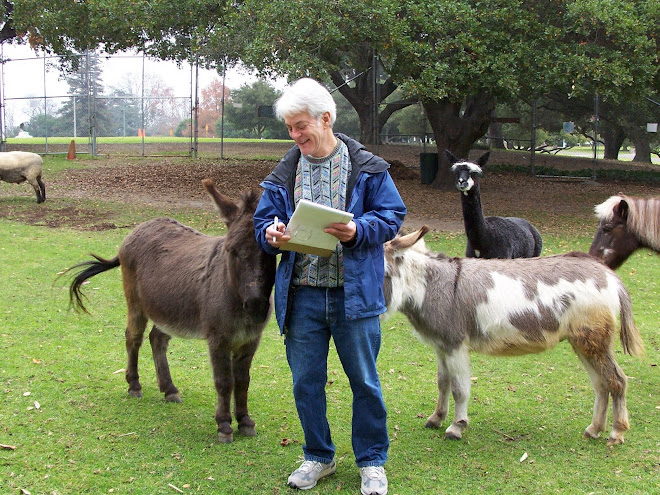
Interviewing the animals at Children's Fairyland in Oakland. L-R: Bobo the sheep, Gideon the miniature donkey, me, Tumbleweed Tommy the miniature donkey, Juan the alpaca, Coco the pony

Thursday, August 6, 2009

The Skipper returns


Hey, boys and girls! Guess who's coming back to town?
Skipper Sedley! And he's bringing King Fuddle with him!
For those who didn't grow up around here, Bruce "Skipper" Sedley and his puppet sidekick, King Fuddle, were stars of children's television in the Bay Area during the 1950s and early '60s.
From 1957 to 1960 they hosted the Popeye cartoon show on Channel 4. Then they hosted the Three Stooges program on Channel 2 from 1962 to 1964, with Skipper's name changed to "Sir Sedley."
King Fuddle actually started life as Professor Fuddle, a weather forecaster who was never right, on Sedley's radio show on KROW (now called KABL), "Nick and Noodnick."
Sedley was "Noodnick," replacing the original Noodnick, the late, great Don Sherwood. Other deejays at the station included Phyllis Diller and Rod McKuen.
He left KROW in 1952 to make films with Russ Meyer, who later became famous as "King of the Bs," producer/director of cheesy movies with great titles, including "Beyond the Valley of the Ultra Vixens" and "Faster, Pussycat! Kill! Kill!"
In 1957 Channel 4 was looking for a show to compete with the Mickey Mouse Club on Channel 7, so it hired Sedley and Professor Fuddle to host Popeye cartoons.
A few months later Sedley visited Children's Fairyland in Oakland, where he saw coin-operated record players playing nursery rhymes. He was told that they were always breaking down, so he suggested a new, state-of-the-art technology called the tape recorder.
Using a repeating looped tape, he invented Fairyland's celebrated Talking Storybooks, activated by a Magic Key that the child inserted into a lock and turned.
"There is no doubt that the Magic Key is the single most enduring icon we have at the park," says Fairyland's executive director, C.J. Hirshfield. "I constantly hear from thirty, forty and fiftysomethings, 'I still have my key!' And I always reply, 'And it still works.'"
Professor Fuddle's name was promptly changed to "King Fuddle of Fairyland," and Sedley began promoting Fairyland on his show. He gave away Magic Keys as prizes, did personal appearances and remote broadcasts from the park, and worked many of Fairyland's characters and sets into the show.
The Talking Storybooks were such a big hit, Sedley started making them for other places, including the San Francisco Zoo, Bronx Zoo, and the 1962 Seattle World's Fair.
Eventually, he realized the technology he had created could be used for wider applications, so he invented the magnetic security card keys that are used in hotels and parking lots. The first card keys were made in his kitchen, using a pasta roller he bought in North Beach.
Nowadays he lives in Hong Kong. But he and King Fuddle will be at Fairyland on August 29 for Puppet Day, where they'll present a ceremonial one millionth Magic Key to some lucky child. (They'll also be there on August 30.)
And, in Sedley's honor, the San Francisco Bay Area Puppeteers Guild will hold its 53rd Annual Puppet Fair at Fairyland that same weekend, featuring free puppet making for children and performances by local puppet companies.
"We are hopeful that many of yesterday's children will bring THEIR children to meet King Fuddle," says Sedley.
If you want to see what he and King Fuddle looked like back in the day, you can watch a video of a complete Skipper Sedley Puppet Show at www.sedleyandfriends.com.

Monday, August 3, 2009

'58 at 50


(Above: Oski the Bear)

More than 320 members of Cal's Class of 1958 (class motto: "None so great as '58") attended their 50th reunion Oct. 3-5, the largest 50th reunion in Cal history.
They cheered when basketball captain Earl Robinson led them in the Cal spell-out, cried when they sang "Hail To California" and reminisced about what Cal was like back in the day.
"One difference is that Telegraph Avenue went all the way to Sather Gate," said reunion chairman Roger Samuelsen. "There were restaurants across the street from the Administration Building (now known as Sproul Hall), where the student union is today."
The most popular was Jules' Coffee Shop, where everyone met for a mass kaffe klatch every day at 10 a.m.
"You arranged to not have a 10 o'clock class; and if you couldn't avoid one, you'd take one for which Fybate notes were available," said Gail Follett Hughes. "I don't know why, because the coffee was terrible. It tasted like metal."
At Sather Gate the students bought ice cream from the Crunchy Munchy Man ("Cruncy Munchy/Great after lunchy," the jingle ran). And before football games at Memorial Stadium they bought frozen fruit ices called Gremlins, which the guys in the men's rooting section laced with vodka.
(Yes, there were separate rooting sections for men and women.)
Social life revolved around fraternities and sororities, with elaborate ceremonies and rigid rules.
"You couldn't wear blue jeans or Bermuda shorts in public, or you'd be 'campused' the next weekend," recalled Sharon Foster Strong. "And if you weren't inside your sorority house by curfew, you'd be locked out.
"If you were 15 minutes late, the house president would be wakened. Fifteen minutes later, the housemother would be wakened. And if you still weren't there 15 minutes after that, they'd call the dean of women, and she'd send the police out looking for you."
One of the most elaborate rituals was the pinning ceremony.
"They always took place on Monday nights, which was dress-up night at the sororities, with everyone wearing high heels and hose," said Lynn Springer Pettit. "We would sit around the dining table, trying to guess who was getting pinned.
"A lighted candle, in the color of the boy's fraternity, would be passed from girl to girl until it came to the one who was being pinned. She'd blow it out, and the rest of us would start screaming and congratulating her, and her sorority big sister would pin the pin on her sweater."
Libby Sutton Middleton added, "Then, if she were lucky and her boyfriend belonged to a local fraternity, the boys from his house would gather on our front porch and serenade us."
Strong interjected, "Another difference between then and now: Notice the correct use of the subjunctive."
Meanwhile, Jack Saroyan and Don Kosovac fondly recalled tearing down the goal post after the 1953 Big Game (a 21-21 tie that knocked Stanford out of the Rose Bowl), rushing the crossbar out of Stanford Stadium just ahead of a mob of angry Stanford fans, and driving it back to their fraternity house, Pi Kappa Alpha, in Berkeley.
"And that crossbar is still hanging from the ceiling of the dining room!" Kosovac said proudly.
But it wasn't all hijinks. Then, as now, Cal was blessed with some of the finest professors in the world, including Armand Rappaport teaching American diplomatic history, Raymond Sontag teaching European cultural history, Josephine Miles and Charles Muscatine teaching English, and Richard Aiken teaching embryology.
"Aiken was a consummate artist," said Pate Thompson. "He would create these gorgeous drawings on the backboard that I admired so much, I would come an hour before class and watch him do it."
Patricia Pereira Nielson added, "Rappaport once gave me back a paper and said, 'You didn't tell me anything I didn't already know.' It was the first time I realized that learning is more than regurgitation."
So what does Cal 1958 think of Cal 2008?
"Well, Telegraph Avenue looks dreadful, but the essence of the university is still in great shape," said Strong. "We might not agree with everything that's happened since we graduated, but remember what Clark Kerr said: 'The university isn't here to make ideas safe for the students; it's here to make the students safe for ideas.'"

(This story originally appeared in the Jan/Feb issue of California magazine.)

Sunday, August 2, 2009

The Best Basketball Coach Ever


(Above: Coach Pete next to the statue of himsef at Haas Pavillion)

Pete Newell, the coaching legend who led Cal to its only NCAA basketball championship in 1959, died last Nov. 17. And his friends are still trying to figure out how he managed to cram so much living into only 93 years.
He was one of only three coaches - along with Dean Smith and Bob Knight, who called him "one of the cornerstones of the game" - to win college basketball's triple crown, taking the Bears to both NCAA and NIT titles and coaching the gold medal-winning U.S. 1960 Olympic basketball team.
"With all respect to John Wooden, it's no coincidence that he didn't start winning all those championships at UCLA until Coach Pete retired," says Joe Kapp, who, in addition to his illustrious football career, played hoops for Newell at Cal. "The last eight times they played, Coach Pete won all eight games."
Newell also achieved great success in the NBA as general manager for the Houston Rockets, Golden State Warriors and Los Angeles Lakers, which he turned into champions by trading for Kareem Abdul-Jabar.
But first and foremost, he was a teacher.
"I always looked forward to practice because I knew I was going to learn something new each time," says Bob Dalton, who played guard on that championship team. "It was like going to a lecture by a great professor like Raymond Sontag or Ernst Frankel, anticipating what he was going to say. We all listened in absolute silence, hanging on every word."
"Teaching was his life," adds Ned Averbuck, who played forward and center. "He considered the court to be an extension of the classroom. He would lead you to the threshold of the right answer without imposing it on you."
The day after Newell died, John Madden said on his radio show, "He was such an incredible coach and teacher, he would have been a success in the NFL or any other sport."
And Bill Walsh, who was an assistant football coach at Cal at the tail end of the Newell era, said shortly before his own death, "The person I admired the most and always wanted to be like is Pete Newell."
Peter Francis Newell was born Aug. 3, 1915 in Vancouver, British Columbia, and grew up in Los Angeles. Through the persistence of his mother, a classic stage mom, he became a child actor before he reached kindergarten, appearing in several "Our Gang" movies.
In 1921 he was up for the starring role opposite Charlie Chaplin in "The Kid," but lost out to Jackie Coogan - to his great relief.
"I hated acting," he said. "All I wanted to do was be home playing ball."
He attended Loyola Marymount University, where he starred on both the baseball and basketball teams.
"I think he knew even more about baseball than he did about basketball, but basketball was his true love," says Rene Herrerias, Newell's assistant coach and eventual successor as head coach at Cal.
After college he spent a year in the Brooklyn Dodgers' farm system before joining the Navy, where he served from 1942 until 1946.
His coaching career began in 1946 at USF, winning the NIT - then the most prestigious tournament in the country - in 1949 and perfecting the zone press defense that became his teams' hallmark, as well as a model for other coaches, including John Wooden, who installed it at UCLA.
And his innovative "reverse action" offense - the basis of many NBA offenses today, including the Lakers' "triangle offense" - was simple but deadly, relying on perfect execution instead of gimmick plays.
After a four-year stint at Michigan State he became head coach at Cal in 1954. Longtime San Francisco Chronicle sports columnist Glenn Dickey, '57, was a Daily Cal reporter at the time.
"Coaches sometimes brush off college writers, but Newell treated us on the Daily Cal with as much respect as he showed to writers from the area's newspapers," he wrote after Newell died.
Like Pappy Waldorf, Newell never yelled at his players for making a mistake.
"He didn't have to," says Herrerias. "He just gave you 'The Look.'"
"He could look right through you," concurs Herb Friedman, a guard from 1955 to 1957. "But when the play was perfect, his eyes would light up and get bigger and bigger, and a big smile came across his face from seeing the purity of the action."
Newell was a master psychologist, with an unerring feel for which players performed best with a pat on the back and which performed best with a kick in the pants. But he had no patience with goof-offs.
"You haven't lived until you've been thrown out of the gym by Pete," says forward Bert Mastrov.
He didn't have the greatest talent in the world. Yet his 1959 squad beat a Cincinnati team starring Oscar Robertson in the NCAA semifinal and a West Virginia team starring Jerry West in the final.
"The secret was that we were a team," says Mastrov. "There were no stars with Pete. Everyone was equal."
"He was able to take a group of fairly mediocre players and make us believe in ourselves so much that we never had to look over to the bench for the play," adds Dalton. "We were maybe the smartest team ever."
Part of the credit goes to Herrerias, who prepared detailed scouting reports on each upcoming opponent.
"By game time, we were better at running their plays than they were," says Dalton.
Many of his games were won in the fourth quarter because his teams were in better condition than the opposition.
"He brought in (track coach) Brutus Hamilton to teach us how to run more efficiently, and he made us run through the hills in Strawberry Canyon," says Friedman. "If anyone didn't finish running the hill, everyone would have to do it again."
But at the peak of his success, after winning the 1959 NCAA title and the 1960 Olympic gold medal, he quit. He was only 44.
"It was my health," he explained. "I was carrying it all inside. I was smoking too many cigarettes, drinking too much coffee, and I couldn't eat anything from Thursday to Sunday."
He moved up to the Athletic Director's job in 1960, serving until 1967, when he began his second career in the NBA.
In 1976 he retired to take care of his ailing wife, Florence, who died in 1984. Asked if he ever considered remarrying, he replied, "Only when I'm alone and driving in the diamond lane."
A devout Catholic, he attended Mass every day until failing health forced him to cut back to once a week. His first prayer was always for Florence.
After his retirement he launched his third career: founder and director of the annual Pete Newell Big Man's Camp, where more than 200 NBA stars learned the fundamentals of playing the post. Among them: Bill Walton, Hakeem Olajuwon and Shaquille O'Neal, who said, "He's the best teacher there is!"
But he refused to accept money for his instruction, explaining, "I owe it all to the game. I can never repay what the game has given me."
In 2001 he added the yearly Tall Women's Camp for WNBA players.
He was inducted into the Basketball Hall of Fame in 1979, and in 2000 the NCAA created the Pete Newell Big Man Award, bestowed on the top college frontcourt player in the country. In 1987 the playing surface at Harmon Gym (now called Haas Pavillion) was named the Pete Newell Court.
That same year, the late Japanese Emperor Hirohito awarded him one of the country's highest honors, the Order of the Sacred Treasures, for his contribution to teaching basketball in Japan.
But all these honors pale compared to his place in the hearts of his players.
"There's an old Jewish prophecy that the earth has 36 righteous men; and as long as they're here, the world will be just fine," says Mastrov. "I think we just lost one."

(A shorter version of this story appeared in the Jan/Feb 2009 issue of California magazine.)
Tuesday, July 28, 2009

Don't call me "Young man!"


I was watching the news on MSNBC when I heard Andrea Mitchell call Ruth Bader Ginsburg "76 years young."
I was furious! How patronizing can you get? As if "young" was a compliment!
But maybe I'm being too touchy. So I decided to check with one of the coolest organizations I know, Senior Center Without Walls.
It's an idea so simple, it's beautiful. Operating out of St. Paul's Episcopal Church in Oakland, it offers homebound seniors more than 40 free telephone discussion groups, accessible via conference calls from the comfort of their own homes. All they have to do is call in at the designated time and join the conversation.
The weekly groups range from the light-hearted (jokes, pets, food, knitting, movies and real-time games of Boggle) to the serious (depression support, coping with loss, and living with chronic pain). When one of the regular participants died a couple of years ago, her telephone friends held a touching conference call memorial service.
So we set up a conference call - the perfect focus group. And more than a dozen people took part, ranging from 55 to 87. And, like me, they all resent this infantilization of old age.
"I've been experiencing this for years; and if you object, you're treated as a naughty child," said Frances, 87. "The other day a man put his hand on my shoulder and said, 'You're a good girl.' I said, 'And you're a good boy, too.'"
"Good for you!" said Barbara, 74.
"I'm a two-fer - 68 and blind," said Anne. "If I'm in a store and have a younger helper with me, they do all the talking to her. 'Does she want this in a plastic bag or paper?' I'm blind, not deaf. I can talk for myself."
Oh, and don't call us "young man" "young lady," "honey" or "sweetheart," either. They're patronizing, too.
Part of the problem is that it's hard to explain old age to someone who hasn't experienced it yet.
"Some people who didn't know you when you were younger are surprised," said Anne. "They'll say, 'Oh, did you drive?' or "Oh, did play tennis?' They think you've always been old."
"We don't speak the same language," said Phyllis, who is in her 80s. "If you say, 'I have 200 CDs,' they think of music; we think of Bill Gates."
Not that we old people dislike the company of young people. Quite the contrary, in fact.
"We're not decrepit and mindless," said Carrie, 73. "We're live people who have a lot to offer to society, and we can be energized by young people who are full of life and vigor and can inspire us."
"Too many old people talk about nothing but their grandchildren and their bowel movements," added Anne. "They're living in the past."
But despite the aches and pains, some of us even like being old.
"I'm proud to be a senior citizen," said Barbara. "It's wonderful to have lived this long."
"It sure beats pimples and PMS!" said Eva, 85.
Senior Center Without Walls is a 501(c)3 non-profit organization, so all donations are tax-deductible. Checks can be sent to 114 Montecito Ave., Oakland CA 94610.
The group is also seeking more volunteers to facilitate discussion groups or call people to remind them they have a conference call coming up later that day.
And, of course, they're always on the lookout for more seniors to participate.
To volunteer, sign up as a participant, or just find out more about Senior Center Without Walls, call 510-444-0243 or toll-free 877-797-7299.

Monday, July 20, 2009

Remembering Uncle Walter


When Dan Rather retired as anchor of "The CBS Evening News" in 2005, my immediate reaction was "You mean we could have had Uncle Walter all this time?"
In a classic case of fixing something that ain't broke, Walter Cronkite was pushed into premature retirement in 1981. Rather was a hot commodity at the time, and the suits at CBS were afraid he'd jump to NBC or ABC. So they gave Uncle Walter the heave-ho to make room for the new guy.
Big mistake. Under Rather, the CBS Evening News quickly slipped to third place in the ratings and has remained there ever since.
Much has been written about how Uncle Walter was the national campfire around which we all gathered every night, and it's true. But my fondest memories go back to the early '50s, before he took over the anchor desk.
He was the star of my favorite TV show, "You Are There." Each program was a half-hour playlet about a historical event, such as the death of Socrates (with Paul Newman as Plato!) or the assassination of Julius Caesar (with E.G. Marshall as Caesar).
Cronkite and his staff of young reporters - including Mike Wallace, Ned Calmer, Winston Burdette and Don Hollenbeck - would pretend to cover the event as a breaking news story. I can hear him now: "Let's go to Mike Wallace, who is with Brutus and Cassius."
He ended each program with the same words: "What sort of a day was it? A day like all days, filled with those events that alter and illuminate our times. And YOU WERE THERE."
Indeed we were. "You Are There" kicked off my lifetime love of history because it depicted history as something that was always in the process of unfolding, not something that was pre-ordained.
The biggest mistake we make about history is to view it as an inevitable march toward the present, as if it was destined to happen that way all along.
But the truth is that the people who lived during these momentous events had no idea how it would turn out. If things had gone just a little differently, the South might have won the Civil War, or Hitler might have won World War II.
In short, the past was just like the present: full of uncertainty about the future. That's what makes history so exciting. And "You Are There" caught that.
And I have another reason for loving the show. I was only seven when it first went on the air, and, like many kids in the '50s, I had a distant relationship with my father.
Watching "You Are There" was the only thing we did together. I remember the time we were watching the episode about the Trojan Horse, and he kept asking me, "Can you figure out where the Greeks are?"
Finally, about 20 minutes into the show, it hit me.
"They're in the horse! They're in the horse!" I shouted.
"You're right!" he said with a big smile on his face. He was so proud of me, and I was so proud of myself.
It wasn't Kevin Costner playing catch with his dad at the end of "Field of Dreams," but it was the next best thing.
And that's the way it was.

Monday, July 13, 2009

The Greatest


I'm still mourning that incredibly gifted musical genius who died way too young.
Yes, he exhibited weird behavior. But what else would you expect from someone who was never allowed to have a normal childhood? He had an abusive father who put him on the road, playing concerts night after night ever since he was a little kid.
Ironically, though he was deeply in debt when he died, his music is now worth gazillions.
Michael Jackson? No, Wolfgang Amadeus Mozart.
It's silly to say that one artist is greater than another. Is Vermeer better than Van Gogh? Is Aeschylus better than Shakespeare?
The only exception is music. Mozart was the greatest, period. And I say this with all due respect for Bach, Beethoven and the Beatles. They were sublime, but nothing can match Mozart.
He can touch places in the human heart that no one else can reach. His music is more beautiful, more moving, more powerful and more delightful.
And everything he wrote is absolutely perfect. You can't add or subtract a single note to any of his works without diminishing it.
When 19th Century conductor Hans Richter was asked, "Who was the greatest composer who ever lived?" he replied, "Well, there's Bach, of course, and Beethoven and Brahms and…"
"But what about Mozart?" his questioner interjected.
"Oh!" he said. "I thought you meant apart from Mozart!"
The best thing about Mozart is that you don't need a degree in musicology to "get" him, just as you don't have to be a movie buff to get "Citizen Kane" or "The Godfather."
The greatest works of art, whether Michelangelo's David, Louis Armstrong singing "Dinah" or, yes, Michael Jackson dancing to "Billie Jean," are instantly accessible. And so is Mozart's music. As soon as you hear it, you love it. It hits you on that primal a level.
But I should shut up. The best evidence is the music itself. As the great conductor George Cleve once told me, "Talking about Mozart too much tends to trivialize him. The only way to explain him is to play him for you."
And that's exactly what he's doing for the next two weeks. Cleve is the founder and musical director of the annual Midsummer Mozart Festival, which is celebrating its 35th season this year.
On the next two weekends, he and his colleagues - all of them world-class musicians, including pianist Seymour Lipkin, French horn player David Sprung and Cleve's wife, flutist Maria Tamburrino - will be playing nothing but Mozart, including the beautiful Horn Concerto No. 3, the delightful Flute Concerto No. 1, and Symphony No. 41, better known as the Jupiter Symphony, the greatest symphony ever written, bar none.
(If you don't believe me, wait until you hear the final movement, which is what George Bernard Shaw must have been thinking of when he said, "Mozart's music is the only music written by a human being that would not seem out of place in the mouth of God.")
The Midsummer Mozart Festival will present two different programs this weekend and next - at the San Francisco Conservatory of Music on July 17 and 24, First Congregational Church in Berkeley on July 19 and 26, and locations in Sonoma and Santa Clara. Visit www.midsummermozart.org for more information.

Sunday, July 5, 2009

More about Rosie


A lot of people didn't believe my story about Rosie standing on top of the kitchen counter. Well, here's proof. (Original story: June 21)