A columnist of heart and mind

A columnist of heart and mind
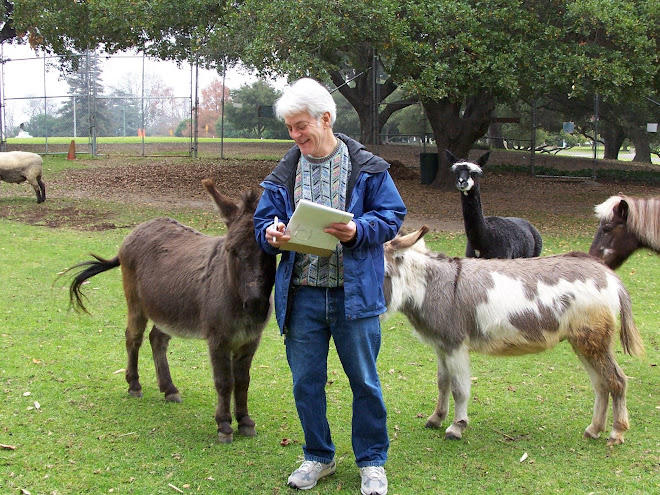
Interviewing the animals at Children's Fairyland in Oakland. L-R: Bobo the sheep, Gideon the miniature donkey, me, Tumbleweed Tommy the miniature donkey, Juan the alpaca, Coco the pony

Sunday, August 7, 2016

Tricky Dick And Us


Tuesday will be the 42nd anniversary of the resignation of Richard Nixon, an event I celebrated by literally dancing in the streets.
Why did people like me despise him so? Partly, it was because he fought dirty. Starting with his first race against Jerry Voorhis, his favorite tactic was intimating that whoever stood in his way was a traitor.
But I think the real reason was because, as much as we hate to admit it, he was the true mirror of our national soul.
We want to think we're like Jack Kennedy - handsome, graceful, a hit with the girls. But the truth is that most of us are more like Nixon - insecure, resentful, and compulsively self-destructive.
I remember the night of the Kent State killings, when he tried to talk with protesters at the Lincoln Memorial by making chitchat about football. How we sneered!
It feels good to make fun of the class nerd. It makes you feel like part of the "in" crowd, even if you aren't.
Especially when you can feel so self-righteous about it. After all, this was Nixon the red-baiter, second only to Joe McCarthy as the arch-villain of the 1950s. He deserved all the bad things that happened to him, didn't he?
Yes and no. Sure, he looked silly talking about touchdowns and field goals to students who wanted to talk about war and peace. But it was the closest he could come to extending a hand. And we slapped it away, laughing at his lamenwss.
To a paranoid like Nixon, it must have been another confirmation of what life had been teaching him since childhood: He really was surrounded by enemies.
"What starts the process, really," he wrote about his passion for winning, "are the laughs and slights and snubs when you are a kid. But if your anger is deep enough and strong enough, you learn that you can change those attitudes by personal gut performance."
And Nixon had a childhood that would make anyone paranoid. His younger brother Arthur died from meningitis, then his older brother Harold died from tuberculosis.
Those illnesses ate up what little money the family had, and Nixon had to turn down a scholarship offer from Harvard and attend little Whittier College, instead. (No wonder he was so jealous of the Kennedys.)
And yet this loser, through sheer force of will, transformed himself into a winner. A lot of us thought he sold his soul in the process, but who among us is without sin? Our beloved Jack Kennedy's record isn't so hot when it comes to the McCarthy era, either. And remember, it was the Kennedys, not Nixon, who authorized the FBI wiretaps on Martin Luther King.
Ironically, after the fall of the Soviet Union the secret KGB files came to light, and it turned out that some of the people Nixon accused of espionage, like Alger Hiss, really were spies, after all.
I know it doesn't make up for Watergate. All I'm saying is that Nixon was speaking for us all when he pronounced his own epitaph the day he resigned: "Others may hate you, but those who hate you don't win unless you hate them. And then you destroy yourself."
There, but for the grace of God, go we.

Sunday, July 17, 2016

Hamilton Would Have Voted For Hillary


You think this year's election is nasty? We're just amateurs compared to the Founding Fathers.
Take the election of 1800 – please! It pitted President John Adams for the Federalists against Vice President Thomas Jefferson for the Republicans (who were actually the forerunners of today's Democratic Party. It's complicated).
Adams accused Jefferson of playing footsie with the radicals in France who were sending people to the guillotine by the thousands (which was true), and Jefferson accused Adams of clapping people into prison for criticizing him (which was also true).
But all that was just a prelude to the main act after the election. The result was a tie. Jefferson got 73 electoral votes, and so did – not Adams, but Jefferson's own vice presidential running mate, Aaron Burr.
This result happened because of a peculiar system in the Electoral College. Each elector had two votes, and the man who got the most votes became president and the guy who came in next became vice president (a system that was changed two years later after they saw what a mess they'd made).
The Republicans blew it. Their Virginia electors thought a few New York electors would vote for somebody beside Burr, and the New York electors assumed the Virginia electors would do it, and the result was that nobody did.
So the decision was left to the lame duck House of Representatives, which was controlled by the Federalists. And a lot of them hated Jefferson so much, there was a lot of talk about voting for Burr out of spite.
But Alexander Hamilton, who had been Jefferson's political arch-enemy for years, put the kibosh on the idea. "If there is a man in this world I ought to hate, it is Jefferson," he wrote his friends in Congress. "But the public good must be paramount to every private consideration."
He still thought Jefferson was a hypocrite and political fanatic, but Burr was worse - "a cold-blooded Cataline, a profligate, a voluptuary, without doubt insolvent." Burr was capable of selling out the country to a foreign power, or starring a war for personal profit.
"For Heaven's sake," wrote Hamilton, "let not the Federalist Party be responsible for the elevation of this man!"
Hamilton's argument carried the day. Jefferson was elected, and Burr went on to shoot Hamilton and organize a conspiracy to create an independent country in what is now the Midwest and the Southwest, for which Jefferson had him arrested for treason. (He got off, thanks to Chief Justice John Marshall, who wanted to stick it to Jefferson.)
And now today's Republican Party – the party of Honest Abe, Teddy, Ike, and The Gipper - will assemble in Cleveland next week to nominate the most reprehensible candidate since Aaron Burr.
It would take ten columns to list all the reasons why he's unfit for this job: his bigotry, his ignorance, his narcissism, his insecurity, his boorishness, his vulgarity, the sadistic pleasure he takes in humiliating people in public - I could go on and on.
But it comes down to this: Our beloved country feels like it's coming apart right now. Do we really need this guy in the Oval Office pouring more fuel on the flames?
For Heaven's sake, let not the Republican Party be responsible for the elevation of this man.

Saturday, July 2, 2016

Those Were The Days

(Above: The Snake and an unidentified man on the right. Photo by Sports Illustrated)

I don't know about you, but I'm looking forward to Ken Stabler's induction into the NFL Hall of Fame on August 6 with mixed emotions.
Yes, I'm happy that he's finally getting recognized. But what took them so long? Why did they wait until after he died, when they knew how much it meant to him?
This isn't the first time the HOF has been a day late and a dollar short. They did the same thing to Les Richter, the great Cal and L.A. Rams linebacker, electing him six months after he died. And there are plenty of other deserving old timers waiting in line, including Jerry Kramer, Jim Marshall and the Mad Duck himself, Alex Karras.
But they're likely to wait a lot longer, as great younger players like Kurt Warner, Ray Lewis and Peyton Manning become eligible and elbow them aside. Kramer, the key player in the Green Bay power sweep, the most famous football play of all time, wasn't even nominated this year.
As more and more younger players retire and more and more Hall of Fame voters are too young to remember the old guys, many old timers will be lucky to get in at all, let alone in their own lifetime.
But don't let my grumpiness spoil the celebration. All hail The Snake, who was Joe Montana before Joe Montana. No amount of bureaucratic disrespect can diminish his glory or the pleasure he gave us.
It really was a golden age back in the 70s, with the Raiders, Warriors and A's all winning championships - the A's three years in a row. But the team that had the strongest hold on our hearts was the Raiders.
How much fun it was to attend a game at the Coliseum! Each section was a tiny community of its own, with many fans turning down the team's offer to move them to better seats as a reward for being longtime season ticket holders because they didn't want to move away from their friends in the section, who they had come to think of as family.
Each section seemed to have its own matriarch, usually called Mom, who adored the Raiders – especially Stabler and Marv Hubbard, who, sadly, also passed away last year – and despised the Broncos and Chiefs.
And Heaven help anyone who cussed in front of kids; the whole section would come down on him. The atmosphere was downright wholesome, in its own rowdy way.
And they were loyal, even when the team betrayed them by moving to Los Angeles. The most loyal of all was a group called the Bay Area Dirtballs, who flew down to L.A. for all the home games.
But within a year after the team returned to Oakland in 1995 most of the Dirtballs had given up their season tickets, preferring to watch games at sports bars like Ricky's, instead.
Why? Two words: Black Hole. They didn't like the new breed of fans the team brought back with it from L.A. They felt their team had been hijacked by a bunch of wild-eyed crazies they had nothing in common with, and it didn't feel like their team anymore.
So as a longtime Raiders fan, I know how a lot of Republicans are feeling these days.

Sunday, June 26, 2016

The Play's The Thing

(Above: Harriet Schlader, founder and Managing Director of the Woodminster Summer Musicals, poses with Daniel Barrington Rubio, who is playing the title role in Shrek The Musical, which will open the organization’s 50th season of musicals in Woodminster Amphitheater.  Photo by Kathy Kahn.)

Joaquin Miller Park in Oakland is one of the Eastbay's crowning glories, featuring cascades, a reflecting pool and the jewel in the crown, the Woodminster Amphitheater, a beautiful open-air facility with spectacular views and a woodsy environment that was built as a WPA project during the Great Depression.
For the last 50 years Harriet Schlader and her late husband Jim, who passed away in 2010, have been delighting local theater fans by presenting some of Broadway's best musicals under the stars at Woodminster. Their first production was South Pacific, followed by Paint Your Wagon, Kiss Me Kate and The Music Man. This year it starts with Shrek: The Musical, which opens July 8, followed by Chicago in August and La Cage Aux Folles in September.
For many East Bay families, it's a longstanding tradition to enjoy a picnic in the park and then see a musical at Woodminster. Some season ticket holders have been sitting in the same seats for three generations.
And they can always count on two things: a highly professional production and a fast-moving show that ends no later than 10:30.
For years, I heard different stories about the reason why. Some said it's the law in Oakland; others said it's in Woodminster's contract with the musicians' union. But Harriet says it's a lot simpler: concern for the audience's rear ends.
"It's stadium seating," she says. "That can be hard on your butt, so we keep the shows down to 2½ hours. As my Jim used to say, 'Get out before they catch on.'"
Jim and Harriet were already Broadway veterans when they began producing musicals at Woodminster. He was a singer whose opera-trained tenor voice made him a favorite with producers - he was never out of work longer than two months for more than 20 years - and she was a dancer who performed with the Radio City Music Hall corps de ballet and on The Jackie Gleason Show as a member of the June Taylor Dancers.
And while they always tried to choose shows for Woodminster that would entertain an audience, they chose shows that elevated the audience, too.
For instance, back in the 1970s segregation was still a way of life in Oakland, but the Schladers fought that attitude with art, presenting No Strings (about an interracial romance) and an Oklahoma with African American actors in the leading roles.
"When the curtain raised, you could see people in the audience elbowing each other, like the wave," says Harriet. "When Curly came out, they sat there with their arms folded. But within 15 minutes they forgot about it and were totally into the show.
"But we still got calls afterward. 'Are you going to do the next show the way you did with Oklahoma?' 'What do you mean?' 'You know, with black people in the cast?' It made me so mad! I mean, it's entertainment! And now here we are years later with Hamilton. It goes to show that anybody can play any role if you engage the audience. That's what theater is all about."
Happy anniversary, Woodminster. May it prosper for another 50 years. And it probably will, because waiting in the wings as Harriet's eventual successor is the Schladers' son Joel, who will direct all three shows this year. And they have lots of grandkids, too.

Thursday, June 23, 2016

Sunflowers


                                   (Photo credit: Sticky Art Lab)
For years there's been a vacant lot in my neighborhood in Berkeley, at the corner of McGee and University. Delancey Street uses it every holiday season to sell Christmas trees, but the rest of the year it's just an eyesore surrounded by a chain link fence.
But when I walked by on May 16 I noticed something different: six enormous sunflower plants blooming along the University side of the fence. On closer inspection, they turned out not to be plants at all. They were images of sunflowers knitted with wool yarn. There was even a knitted ladybug on one of the leaves.
The artist's name, I found out, is Dawn Kathryn. Seven years ago she took a knitting class at the Oakland Library and got the bug (pun intended). This is her second knitted public art project. The first was a sweater she knitted for a tree in West Oakland in front of Kilobolt Coffee shop.
Alas, it's not there anymore. A vandal tore it down, which is frustrating because she works as much as six months on each project. And two weeks ago the same fate also befell the sunflowers. Somebody cut their heads off.
"After putting in that much time on a project, it can be a little nerve wracking hoping nobody takes it down," she says. "It doesn't matter how many people like it, one mean person can screw it up for everybody who enjoys it."
But that's not the end of the story. The lot is only a couple of doors down the street from Sticky Art Lab, a great, only-in-Berkeley art studio for kids where they can experiment with scrap materials and create unique, handmade works of art.
The next day, the kids from Sticky Art Lab were out there restoring the sunflowers (including the ladybug) to their former glory. I spoke with two of them: Sasha, 8, and Emma, 10.
"With no sunflowers, the fence looked really sad," says Sasha. "All Dawn was trying to do was make the world a prettier place, although there's beauty in everything, I think."
"And if it isn't as beautiful as it could be, you can always try to make it better," Emma adds.
They worked in teams: One kid holding each flower or leaf in place while the other tied it to the fence with matching-color yarn.
"We started with the flowers, and after that we worked on each separate petal," Emma explains.
Now the sunflowers look better than ever, bringing a smile to everyone who sees them.
"It was really fun," says Sasha. "I felt really good after we did it."
"It makes me proud to admire my work every time every time I pass by," says Emma.
As for Dawn, she's already at work on another public knitting project: a sweater for a signpost around the corner from Discount Fabrics on Ashby and San Pablo.
"I don't have a timeline; I do it when I can and when I feel like it," she says. "But the post isn't very large, so I don't think it will take long."
And she's grateful to the folks at Sticky Art Lab.
"It's a wonderful place, with great afterschool programs and summer camps. And they are wonderful people, as attested to by the fact that they repaired my flowers."

Garden of Memory

(Above: Luciano Chessa playing the musical saw at  the 2012 Garden of Memory)

One day 20 years ago, Berkeley pianist Sarah Cahill, one of the best known exponents of New Music, took a break from performing to write a newspaper story about the most exotic restrooms in the East Bay. One of the places she checked out was the Chapel of the Chimes in North Oakland. It's a columbarium, a repository for the ashes of the dead, including bluesman John Lee Hooker, baseball star Dick "Rowdy Richard" Bartell, and Raiders boss Al Davis.
The restroom turned out to be nothing special, but the rest of the building – oh my! It was designed by Julia Morgan, and if you've ever seen Hearst Castle, you know that Morgan was in love with Gothic architecture. The Chapel of the Chimes features pointed arches, vaulted ceilings, fountains, gardens and – above all – stained glass everywhere. The result is a magical ballet of ever-shifting patterns of light and color.
"To hear the rippling of the water in the fountains, smell the blooming gardenias, see the glow of warm light coming through the stained glass windows and skylights - it's a place where you enter and you can't help but start exploring because it's a real wonderland that beckons you inwards," says Cahill.
Then she got a brilliant idea: What a great place this would make for a concert! Or, rather, 45 different concerts going on simultaneously. She put a different musician in each room and invited people to take in as much (or as little) of each performance as they like, then move on to the next room and a completely different experience.
And here's the most brilliant part: She decided to hold the concert on the Summer Solstice, the longest day of the year, to take advantage of all the sunlight.
It was an immediate hit, and 20 years later the event, called Garden of Memory, is going stronger than ever. This year's concert will be on June 21 and will feature 45 different performances ranging from quirky to bizarre. It's musicians at play, having fun doing what they do best – making music.
Among this year's lineup:
·                     In the Garden of St. Mark: Mills College music professor Maggi Payne playing theremins (think of the end of "Good Vibrations") and inviting kids in the audience to join in.
·                     In The Chapel of Patience: Henry Kaiser (grandson of industrialist Henry J. Kaiser, who is buried next door at Mountain View Cemetery) and Norwegian guitarist Knut Reiersrud playing electric guitars while Kaiser's wife Brandi Gale, a synesthete (meaning she sees vivid colors in her mind when she hears music), makes spontaneous paintings as she listens to them play.
·                     And in The Sanctuary: 25-year-old composer Dylan Mattingly, who began attending these concerts with his parents when he was a little kid, playing improvisations influenced by bluegrass and the microtonal choral music of Polynesia with his old friends from Berkeley High, violinists Eli Wirtschafter and Alex Fager.
The Chapel of the Chimes is at 4499 Piedmont Avenue. The music starts at 5 p.m. and will go on until the last of the light filters through the windows at 9. Tickets are $15 general, $10 for students and seniors, and $5 for kids. It's the coolest concert of the year, a Black & White Ball for Bohemians. Be there or be square.

Saturday, June 4, 2016

The Greatest

(Above: the Champ with four guys from England, probably the only people in the world who were almost as famous as he was)

He was, as he never stopped reminding us, The Greatest.
Of course, we'll never know how great he could have been because he was still approaching the height of his physical powers when he was exiled from boxing in 1967. By the time he returned to the ring three and a half years later, he had clearly passed his prime. But that was still good enough to beat two of the greatest heavyweights of all time, Joe Frazier and George Foreman.
But for all his prowess inside the ring, his true greatness lay in what he did outside it. By refusing fight in Vietnam – "No Viet Cong ever called me (the N-word)," he explained – he incurred the wrath of what we used to call "the establishment."
White male sportswriters – and there were no other kind in those days - exploded in vituperation. Red Smith of the New York Herald Tribune wrote, "Squealing over the possibility that the military may call him up, Cassius makes himself as sorry a spectacle as those unwashed punks who picket and demonstrate against the war." (Note the refusal to call him Muhammad Ali.)
Jim Murray of the Los Angeles Times accused him of ingratitude for the Civil War: "Muffle the guns at Vicksburg. Spike the guns of Sumter. Burn the banners of the noblest cause man ever fought for. Cassius Marcellus Clay has decided to secede from the Union. After 103 years of freedom, he sulks."
The only prominent national leader who sent him a telegram of support was Martin Luther King. And the only white sportswriter to defend his right to be himself – to his everlasting credit - was Howard Cosell, who said of his colleagues, "They wanted another Joe Louis, a white man's idea of a black man. Instead, they got Ali, who was unafraid to speak his mind no matter what the consequences."
It's probably hard for younger people to understand what Ali meant to people my age. Vietnam was the defining issue of our generation, dividing American families every night over the dinner table. By refusing to go to war, Ali became our hero, our champion, our beau ideal.
I only saw him in person twice. The first time was in 1967, shortly after he was stripped of his title, at an anti-war March in Los Angeles. He was the most handsome man I ever saw, and one of the most articulate. He gave us a short, thoughtful talk urging us to think carefully about what we were about to do because we were likely be beaten and arrested - prophetic words, because that's exactly what happened when the L.A. cops, who were a law unto themselves, staged a police riot.
The second time was in 1990, when he appeared at Cody's Books in Berkeley on a book tour. I stood in line to meet him with everyone else; and when it was my turn, I was so star struck I could only babble incoherently about how much I loved him.
Parkinson's had already robbed him of his speech by then, so he held up his hand to stop me and, with infinite dignity and grace, lifted himself up out of his chair and shook my hand.
He was a great man. He was a good man. God bless his memory.