A columnist of heart and mind

A columnist of heart and mind
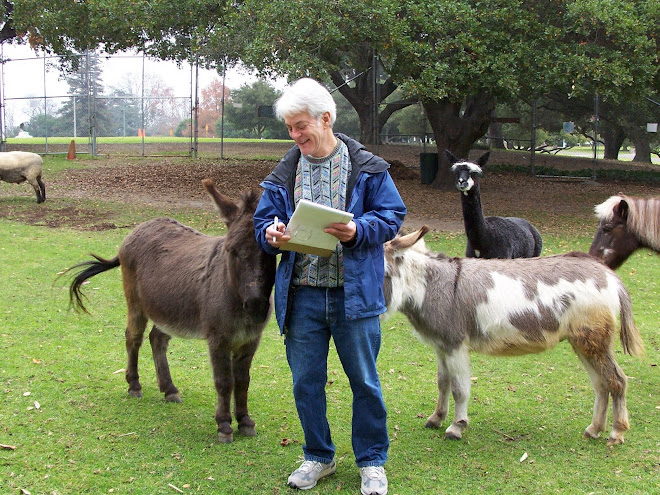
Interviewing the animals at Children's Fairyland in Oakland. L-R: Bobo the sheep, Gideon the miniature donkey, me, Tumbleweed Tommy the miniature donkey, Juan the alpaca, Coco the pony

Friday, July 10, 2015

Books 'R' Us - And Vice Versa

(Above: Vanessa Hua, Hector Tobar, Paul Beatty, and Oscar Villalon (moderator) on "The Reshaping of American Literature." Photograph by Nora Lowinsky.)

Two years ago, Kira Brunner Don and her husband, Timothy Don, packed up their two kids and moved back to Oakland, where Kira grew up, after 20 years in New York. They work for Lapham's Quarterly – she's the editor at large; he's the art director - which uses primary source material from history to examine a specific theme in each issue, such as "Foreigners," "Time" or "Youth."
They wanted to put down some roots in their once-and-future hometown, so they decided to found a book festival.
"We had done some festivals in New York, so we said, 'Let's do what we already know how to do,'" says Kira. "We wanted to make this a festival that we would want to go to."
And they did. The first annual Oakland Book Festival was held May 30 at City Hall, and it was cool beyond belief.
It wasn't just a collection of readings, and it wasn't just a trade show of people selling books, either. Instead, it was a curated festival of ideas. Kira and Tim chose a concept and created panels and readings around it.
For the inaugural festival, the concept was "Cities," both the upside and the downside.
"The upside is that we find in cities the highest expression of utopian dreams and projects – including diversity, tolerance, and a cosmopolitan outlook – and Oakland is an expression of that," says Tim. "The downside of course, is the dystopian outcome that sometimes happens with utopian projects."
They turned all of City Hall's hearing rooms into panel rooms and filled them with 35 different panels, including:
An examination of the life and works of the late journalist Alexander Cockburn, featuring Bruce Anderson, the founder/editor of the Anderson Valley Advertiser, a quirky community-based newspaper in Boonville; activist/historian Frank Bardacke, one of the leaders of the anti-war movement in Berkeley in the late '60s; and writer/historian Leo Hollis, who flew in all the way from London for the occasion.
"What Does It Mean To Lead A Radical Life?" a comparison of the Black Panthers in Oakland, the Occupy Wall Street movement in New York and the Anti-Apartheid movement in Johannesburg, featuring former Panther leader Elaine Brown, documentary filmmaker Astra Taylor and UC Irvine professor Frank Wilderson, one of the few Americans who worked with the African National Congress in the 1960s, when most of the world still thought of Nelson Mandela as a thug.
And "What Is Gentrification?" a panel featuring urban planners Lance Freeman, a professor at Columbia, Malo Andre Hutson, a professor a Cal, and author Gordson Young, moderated by local writer/poet/journalist Dashka Slater.
Outside on Frank Ogawa Plaza, 40 different independent booksellers were selling their books while the Oakland Youth Chorus, the Oakland School for the Arts Classical Guitarist Ensemble, and rappers Dizzy, J-Mal and Khafre Jay from HipHop4Change provided entertainment.
The youngest generation wasn't left out, either. Throughout the day, staffers from the Oakland Public Library read children's stories to the little tykes, while interactive storytellers from Children's Fairyland told the tales of Tweedle-dee and Little Miss Muffet.
And it was all free. No tickets, no need to sign up online. "We wanted to make sure that people who don't have credit cards or computers would show up," says Tim.
Next Year's concept: "Labor."
For more information, visit oaklandbookfestival.org.

Friday, July 3, 2015

Happy ending!

The firefighters open the grate

Stormy right after he was rescued

Stormy 10 days later


On Sunday, June 14, Charlie Dewett of Oakland was driving to Laney College to watch his tennis team play when he stopped at a stoplight at the corner of Oak and 7th streets.
" I hard this unbelievably loud cry," he says. "It was like some creature was yelling, 'Help me! Help me!' I pulled over, and I could hear it was coming from a storm drain. I looked down, and there was this baby orange tabby kitten crying."
He managed to squeeze a little food and water through the grate – no easy task, believe me – to keep the kitten alive while he sought help. He called Animal Control, but they're closed on Sundays. He called the police, but no luck there, either.
This went on all day long. Charlie kept going home and coming back to check on the kitten. He was worried because it was turning into a cold night. But when he came back the next morning, the little guy was still alive.
Then he remembered meeting a woman named Gail Churchill, who volunteers for Island Cat Resources and Adoption in Alameda. A quick phone call later, and she was on her way to Oakland with a humane trap.
"We had two problems," Gail says. "One, could the kitten be enticed to go into the trap? And two, who would raise the 300-lb. metal grate on top of the drain? Oakland Fire Station No. 12 to the rescue! Charlie called them, and within 15 minutes they were there with the tools to raise the grate."
They baited the trap with cat food and waited.
"Monday came and went," says Gail. "Tuesday came and went. All this time, Charlie made many trips a day to check on the kitten's well being. Then we noticed the food in the trap was always gone, but the trap stayed open. It became apparent that the kitten was too light to set off the trap door.
"So on Wednesday morning we brought in a different and smaller trap. This time Charlie, along with two very nice BART policemen, lifted the grate, and the trap was lowered into the hole. Success! Within two hours we had the little guy, by now named Stormy, safe in the trap. Firemen from Station 12 again came to lift the trap out of the hole, and Stormy was on his way to my house for a good, warm bath and all the food he wanted!
"Stormy is settling in nicely and will stay with me until he is old enough to be neutered, about 2-3 weeks. At that time he will be put up for adoption, and we will make sure he gets the kind of 'furever' home where he never again has to think about his terrible start in life. Stormy wishes to thank, most of all, Charlie, for hearing his cries, and for never giving up on him. And those of us involved in this three-day ordeal wish to thank BART Police and the dedication of Fire Station No. 12 for their, many trips to move the grate for us."
If you'd like to adopt Stormy, you can check him out at ICRA's website, www.icraeastbay.org, in a couple of weeks. That's also where you can make a donation to this very worthy organization.

Sunday, June 28, 2015

Music Hath Charms

                                         (Above: Maestro Cleve)

There will be many "mostly Mozart" music festivals throughout the country this summer; but there's only one dedicated exclusively to Mozart. And it's right here in the Bay Area.
It was founded in 1974 by Maestro George Cleve, one of the world's foremost Mozart intepreters, and his friends one night when they were kicking back with a few beers after rehearsing Mozart's opera, "The Abduction From The Seraglio."
"Wouldn't it be great if we could play nothing but Mozart all the time?" someone idly mused. They all looked at each other in amazement, and voila! The Midsummer Mozart Festival was born.
For more than four decades it has been serving up the greatest music ever composed – sorry, Bach, Beethoven and Brahms fans, but it is what it is - played by world-class musicians.
Two different programs will be presented over a two-week period. The first program will be at Bing Concert Hall at Stanford on July 16, the San Francisco Conservatory of Music on July 17, and First Congregational Church in Berkeley on July 19. The second program will be at Stanford on July 20, San Francisco on July 24, and Berkeley on July 25. Visit midsummermozart.org to buy tickets and find out program details.
One of the most delectable offerings will be legendary pianist Seymour Lipkin playing Piano Concerto No. 27, K. 595, which happens to be Cleve's favorite. (Not for nothing does his email address start with gcleve595@........)
But for me, the highlight of the festival has to be Mozart's final symphony, No. 41, better known as the Jupiter Symphony. Mozart never actually called it that; it was nicknamed by an impresario named Johan Peter Salomon a few years after Mozart's death. But never was a moniker more appropriate.
The Jupiter is not only the greatest symphony ever written, the final movement is one of the most sublime moments in western art.
It's a marvel of musical virtuosity, in which Mozart attempted – and succeeded! - something nobody else ever dared: combining a fugue with a sonata in the same movement, with five different themes going all at once. Nobody could pull it off but him, but you hardly notice the skill because you're too busy being bowled over by the emotional impact.
Sir George Grove, who founded Grove's Dictionary of Music and Musicians, wrote, "It is in the finale that Mozart has reserved all the resources of his science, and all the power, which no one seems to have possessed to the same degree with himself, of concealing that science, and making it the vehicle for music as pleasing as it is learned. Nowhere has he achieved more."
Let me put it another way. I've been hesitating to write this because you might think I've gone off the deep end, but I confess to feeling a stab of fear whenever I listen to that final movement because I'm always afraid I'll be turned into a pillar of salt for having listened to the voice of God.
There, I've said it. I know it sounds completely over the top, but listen for yourself and tell me if you don't feel that same apocalyptic rush.
But if you get turned into a pillar of salt, don't say I didn't warn you.

Sunday, June 14, 2015

O Happy Day!

(Above: General Granger (R) with Admiral David Farragut)

On June 19, 1865 –150 years ago this Friday – Union soldiers commanded by Major General Gordon Granger landed at Galveston, Texas and gave the residents some stunning news: The Civil War was over, the North had won, and the slaves were free.
The whites listened in sullen silence. The blacks broke out in joyous demonstrations.
Gen. Granger's proclamation said, "The connection heretofore existing between (former masters and slaves) becomes that between employer and free laborer," but many freedmen didn't wait for their old masters to offer them a job. Even with nowhere to go, they felt that leaving the plantation would be their first step towards freedom.
But they and their descendants returned to Galveston every June 19, which they nicknamed "Juneteenth," to celebrate the moment they first heard the glorious news. And many African Americans still observe Juneteenth to this day to celebrate family and freedom – two things that go hand in hand, considering that slave families were in constant danger of being split up whenever the master felt like selling some of them off.
We have all kinds of national holidays, but we have never established one that deals directly with the most important thing in our history: slavery, whose toxic residue still poisons the body politic.
We sort of hint at it with Martin Luther King Day, but that focuses on events that happened 100 years after slavery was abolished.
It's high time we corrected that oversight. I say next June 19 should be a national holiday. And it should be on June 19, too, not the closest Monday. Moving our holidays to the closest Monday, just so we can have more three-day weekends, totally misses the purpose.
Holidays are not created to make it more convenient for us to enjoy ourselves. They're supposed to be inconvenient. That's the whole point: We disrupt our already busy lives because the person or event we're observing is that important.
At the rate we're going, in 20 years Independence Day will be celebrated the first Monday in July, and Christmas will be celebrated the last Monday in December.
While I'm at it, there are a few other dates I think should be national holidays, too:
June 6 (D-Day, to honor the G.I.'s who fought in Europe),
December 7 (Pearl Harbor Day, to honor those who fought in the Pacific),
 November 22 (JFK's assassination, and I'm stunned that I have to explain this to younger readers),
And, of course, September 11.
But if you'll let me have these holidays, there's one I'll gladly give back: President's Day. What kind of holiday is that? Does it mean we should honor bozos like Millard Fillmore or James Buchanan or Andrew Johnson?
It's an amalgamation of two very worthy former holidays: Washington's Birthday, February 22, and Lincoln's Birthday, February 12. (Did you know Lincoln and Charles Darwin, arguably the two most important people of the 19th Century, were born on the same day in 1809?)
Washington won our independence and then shocked everyone by retiring instead of making himself a military dictator. Lincoln preserved the Union and freed the slaves. Both guys deserve their own days. So let's give it to them and return Millard, James and Andy to the obscurity they so richly deserve.
Happy Juneteenth, everybody!

Thursday, June 4, 2015

Sunsweet Marches On!

(Left to right: Cecil, Stan, and Dishonest John)

What do Albert Einstein and I have in common?
Answer: We were both huge fans of a children's puppet show called "Time For Beany," which ran on TV in Los Angeles from 1949 to 1955.
And the comic genius who made "Time For Beany" so funny was Stan Freberg - the voice of both Beany's sidekick, Cecil the Seasick Sea Serpent, and the villain, Dishonest John - who died on April 7 at the age of 88. 
The early 1950s were a Golden Age for comedy. The old-timers like Bob Hope, Fred Allen and the funniest of them all, Jack Benny, were still going strong; and coming up fast was a generation of brilliant newcomers including Mort Sahl, Lenny Bruce, Ernie Kovacs, Jonathan Winters, Tom Lehrer and Bob Newhart.
But Freberg was special, even among that august company. After Beany he went on to make satirical records like "Green Chri$tma$," starring an adman named Scrooge who wants to make as much money off Christmas as possible; "St. George and the Dragonet," a takeoff on "Dragnet" set in the Middle Ages, with Joe Friday (voiced by Freberg in a perfect imitation of Jack Webb's clipped monotone) rescuing a maiden from a dragon; and "Sh-Boom," a parody of rock'n'roll, with the singer frantically stuffing rags into his mouth while the producer keeps complaining that he can still understand some of the lyrics.
But his fans – including Paul McCartney, Steven Spielberg, George Carlin, Penn Jillette (the talking half of Penn & Teller) and Weird Al Yancovic, all of whom cited Freberg as a major influence - considered his 1961 album, "Stan Freberg Presents the United States of America," to be his masterpiece.
It tackled every hot-button issue of the day, from the McCarthy Red Scare, with Ben Franklin worrying about being hauled up before the Un-British Activities Committee if he signs the Declaration of Independence, to liberal hypocrisy, with the Pilgrims singing "Take An Indian To Lunch Today" ("Let's give in and all do the brotherhood bit/Just make sure we don't make a habit of it.")
The Los Angeles Times called it "the 'Sergeant Pepper' of comedy albums," and every listener poll conducted by Doctor Demento has named it the greatest comedy album of all time.
But I think he reached even greater heights when he went over to the Dark Side and started making commercials for the same corporations he used to make fun of.
Guided by the motto Ars Gratia Pecuniae - Latin for "Art For Money's Sake" - his production company, Freberg Ltd. (But Not Very), turned out adsß for everyone from General Motors to the U.S. Army, including:
Chun King Chow Mein: An unseen announcer intones, "Nine out of ten doctors prefer Chun King Chow Mein" as the camera slowly pans to show ten guys in lab coats and stethoscopes – nine Asian and one Caucasian.
Cantadina Tomato Paste: "Who puts eight great tomatoes in that little bitty can?"
And my favorite, Sunsweet Pitted Prunes: "Today, the pits! Tomorrow, the wrinkles! Sunsweet marches on!"
He used to say, "Hey, folks. This is pizza rolls we're selling, not the Holy Grail." But that wasn't quite true. He once composed a jingle for the United Presbyterian Church that asked, "Doesn't it get a little lonely, out on that limb/Without Him?"

Tuesday, June 2, 2015

Ms. Patel's Summer Reading List For Kids

(Above: Ms. Patel reading to students at Redwood Day School)

Once again, by popular request, here's Ms. Patel's Summer Reading List For Kids, courtesy of Liz Price Patel, Head Librarian at Redwood Day School in Oakland:

Grades K-1
The Book with No Pictures by B.J. Novak
Early elementary kids will roll on the floor laughing when you read this book aloud with them for the first time. As they develop their own reading skills, they will delight in following along.

Dragons Love Tacos by Adam Rubin
Fun for dragon experts and novices alike, Dragons Love Tacos is a whimsically and beautifully illustrated picture book about the dangers of feeding dragons spicy salsa.

Grades 1-3
The Noisy Paint Box: The Colors and Sounds of Kandinsky’s Abstract Art by Barb Rosenstock
Opening this picture book biography opens a dialogue with your child about the wonders of abstract art and the day Vasily Kandinsky “invited the world to see the paintings roaring from his noisy paint box.”

The Chicken Squad: The First Misadventure by Doreen Cronin
If you have enjoyed Cronin’s picture books (like Click Clack Moo: Cows that Type), you’ll love this next step in reading. In their first early chapter book misadventure, Dirt, Sugar, Sweetie, and Poppy are on the case to solve the mystery of what landed in the backyard.

Grades 3-5
Neighborhood Sharks: Hunting with the Great Whites of California’s Farallon Islands by Katherine Roy
This nonfiction work is a beautiful combination of science and art. Roy captures the strength and beauty of Great Whites in her illustrations and details shark facts in her clear and poetic text.

5,000 Awesome Facts about Everything by National Geographic Kids
Pages full of fascinating snippets will keep trivia lovers busy for hours.

Timmy Failure series by Stephan Pastis
Kid detective Timmy Failure is the founder of Total Failure, Inc., (Total being Timmy’s polar bear sidekick, of course). Even the most reluctant readers can’t help but laugh out loud while solving these cases.

Grades 4-6
El Deafo by Cece Bell
This autobiographical graphic novel captures universal childhood truths through the eyes of Cece, a girl who loses her hearing just before entering kindergarten.. In her daydreams, Cece’s superhero name is El Deafo; and in real life, the power of her device allows her to hear her teacher anywhere in school. This can come in handy for a girl who really wants to fit in and make new friends.

Turtle in Paradise by Jennifer Holm
The Key West backdrop makes this a sweet summer read. Eleven-year-old Turtle finds herself transported from New Jersey to Key West to live with relatives. Set in the midst of the Great Depression, this book brings together the intricacies of family, making new friends, and buried treasure.

Grades 5-8
Echo by Pam Muñoz Ryan
Follow the story of a fairytale harmonica that brings courage and hope to its musicians: Friedrich in Nazi-era Germany, Mike in Great Depression-era New York state, and Ivy in a California Central Valley farming community during WWII. The stories of each child leave off at a cliff-hanger and come together in the end to form a masterful novel.

CHERUB series by Robert Muchamore
It has been hard to keep the CHERUB spy novels on our library shelves. Summer reading should be riveting and fun, and for the action-adventure lovers out there, Muchamore’s teen intelligence agents will do the job.

Saturday, May 16, 2015

The King Is Gone, But Not The Thrill

I'll never forget the first time I heard B.B. King. The date was Dec. 7, 1967, and the place was the old Fillmore Auditorium in San Francisco.
I had no idea who he was, and neither did anyone else in that audience of white hippies. We were there to see the Electric Flag - the band Mike Bloomfield formed after he left the Paul Butterfield Blues Band - and the Byrds, making their first appearance after Jim McGuinn changed his name to Roger.
Then Bill Graham announced, "Ladies and gentlemen, I bring you the chairman of the board, B.B. King!" And out came this middle-aged man wearing a suit and tie, of all things.
In a world-weary voice he sang the first few words of his classic, "Sweet Sixteen" - "My brother's in Korea, baby; my sister is in New Orleans" - and ripped off a wicked lick on his guitar that made all our heads snap to attention.
His left hand fluttered up and down the guitar's neck like a butterfly, fingers vibrating to wring the last ounce of soulful feeling out of each note. It was a perfect visual metaphor for the blues – making something exquisitely beautiful out of something so profoundly sad.
We had never heard anything like that, and we leaped to our feet in excitement.
B.B. remembered that concert, too. I didn't know it at the time, but I was privileged to present at a historic moment - when he finally broke through to a mainstream audience.
Two years before, an emcee at a nightclub in Chicago had introduced him with the humiliating words "OK, folks. Time to pull out your chitlins and your collard greens, your pig's feet and your watermelons, because here is B.B. King." He was furious.
But it was a different story when he played the Fillmore two years later. As he recalled, "When I saw those long-haired white people lining up outside, I told my road manager, 'I think they booked us in the wrong place.' Then everybody stood up, and I cried."
And his new fans stayed loyal as he – and we - grew old together. For decades, whenever B.B. and I were in the same city, I always made it a point to catch his act. And he never disappointed.
He played with everyone from Eric Clapton to Barack Obama, who sang a charming duet on "Sweet Home Chicago" with him at the White House last year. But his favorite singer was Frank Sinatra, whom he credited for opening up the lucrative gigs in Las Vegas for him.
His virtuosity was legendary among other guitarists; but, like Fred Astaire, he never let you see him sweat. Those gorgeous, sensuous guitar lines seemed to flow effortlessly from his fingertips.
And though he took his music very seriously, he wasn't afraid to make fun of it, as in his hilarious song, "Nobody Loves Me But My Mother, And She Could Be Jivin' Too."
He was inducted into the Rock and Roll, R&B, and Blues Halls of Fame and received both the Kennedy Center Honors and the Presidential Medal of Freedom.
Now he's gone, but the thrill is not. Thanks to technology, we will always have his music with us.
But I'm still going to miss that butterfly.