A columnist of heart and mind

A columnist of heart and mind
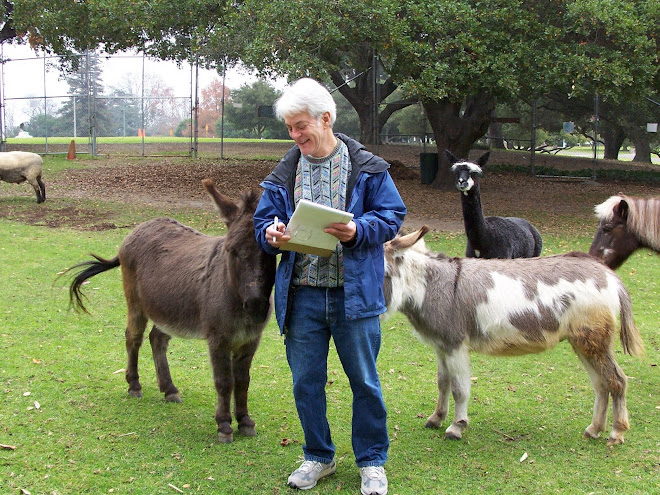
Interviewing the animals at Children's Fairyland in Oakland. L-R: Bobo the sheep, Gideon the miniature donkey, me, Tumbleweed Tommy the miniature donkey, Juan the alpaca, Coco the pony

Sunday, September 13, 2015

Remembering Martin, Joaquin and Moses


Sad to say, three cultural touchstones of my youth died over the few days. The first was actor Martin Milner, who died on Sept. 6. Milner made all the boys in my generation want to hit the road when he starred In "Route '66" and then made us all want to be cops when he followed that up by starring in "Adam 12."
But despite his successful TV career, the critics were less kind when he tried the big screen. When he played a reporter in the 1959 film "Compulsion" (based on the notorious Leopold and Loeb murder case), the acerbic critic Pauline Kael said of his acting, "If the killers really had been aesthetes, he would have been the victim."
Two days later, pitcher Joaquin Andujar also died. Andujar is best remembered for pitching the St. Louis Cardinals to victory in the last game of the1982 World Series, but his finest moment came in the locker room after the game.
After answering interviewer Bob Costas’ question about a leg injury he had suffered, Andujar politely asked Costas to excuse him a moment and then addressed the international audience in Spanish, expressing his pride as a Dominican and saluting the Dominican people, his family, and the country’s president.
It was a moment that made every Latino kid in this country swell with pride, just as every Jewish kid kvelled in 1965 when Sandy Koufax refused to pitch the first game of the World Series because it fell on Yom Kippur.
Don Drysdale got the assignment in Koufax's place and was shelled unmercifully, giving up seven runs in 2 2/3 innings. When manager Walter Alston came out of the dugout to pull him from the game, Drysdale said, "I bet right now you wish I was Jewish, too!"
Andujar is also remembered for uttering the best baseball quote not said by Yogi Berra - "Baseball can be summed up in one word: 'You never know.'"
Three days after Andujar, Moses Malone, the Hall of Fame basketball player who teamed with Dr. J to lead the Philadelphia 76ers to the NBA championship in 1983, also died. He was one of the first players to go straight from high school to the pros.
Back in the 1980s, when the Cold War was at its height, the Bay Area Council for Soviet Jewry in San Francisco, whose mission was to support the Jewish "refuseniks" who were defying the Communist regime, regularly contacted local Jews who were planning to visit the USSR and asked them to smuggle messages and/or money to the dissidents.
One of those they contacted was a local rabbi, who agreed to smuggle a note to refusenik leader Anatoly Scharansky. But before he could deliver the message he was busted by the KGB, clapped into the Lubyanka prison, and ruthlessly interrogated for more than a week.
"Tell us the name of your spymaster!" they kept demanding over and over. He realized that they probably knew nothing about American sports, so he finally cried, "OK, OK! I'll tell you! It's Rabbi Moses Malone!"
And it worked. They released him and deported him back to the U.S. And sure enough, six weeks later Pravda ran a front-page story exposing the evil machinations of the CIA and its nefarious spymaster, Rabbi Moses Malone.

Sunday, August 30, 2015

A Maestro For All Seasons


Last Thursday, Audrey Vardanega, the fabulously talented young concert pianist from Oakland, was in her apartment in New York City, where she's beginning her junior year at Columbia, practicing "Scarbo," the final movement of Ravel's suite "Garspard et la nuit."
Suddenly, the phone rang. It was her mom calling from Oakland with the news she'd been dreading for months: Her beloved mentor and surrogate grandfather, the great conductor George Cleve, whom poet Lawrence Ferlinghetti called "one of the great Mozart interpreters of our time and place," had died from liver failure earlier that day in his home in Berkeley.
"I was truly, truly blessed to have him in my life," she says. "George took me in when I was 11 years old. He coached me, arranged some of my first appearances with orchestras, watched old movies with me, and taught me the importance of respecting the integrity of the composer. He never missed a concert I gave.
"He taught me how to give some of myself to others through music. He showed me how to use music to express love. I am so thankful for his grand life, his stubborn love, and his support for all my endeavors. I know that he's listening when I play, and I will never play another bar of Mozart without thinking of him. I will always miss him."
Then, when the phone call was over, she paid tribute to him in the only way she could think of: She went back to practicing "Scarbo."
"I felt it would be OK because wherever there's music, he's there. That's the beauty of George: He WAS the music. He wasn't just a conductor; he let the music consume and define him. I was supposed to play that piece for him next December, but now that's not going to happen."
But she did get a chance to play for him one last time the week before he died, when she went to his house to see him before boarding the plane for New York. She played some of his favorite pieces, including "Ondine," the first movement of "Gaspard et la nuit," and the "Petrarch Sonnet" by Liszt.
"I'm so happy I did that. I would have regretted not seeing him one last time. He didn't look very good, and I had a horrible feeling that I wasn't going to see him again. I knew that this was it."
But, in a curious way, she's still learning from him.
"That night I wasn't able to go to sleep. I kept hearing a motif from Brahms' 'Romance,' and it was as if he was coaching me on it, giving me advice. He loved Brahms, and this motif kept repeating and repeating in my head. It felt like George was planting it there."
And she'll keep learning from him for as long as she lives.
"I'm not a religious person, but whenever I play anything I played for him that he loved to hear, I'll feel him listening. He gave so much to so many, and he asked for so little in return."
And the feeling was mutual. I once asked George how good Audrey was for her age, and he laughed and said, "Martin, she's good for ANY age!" Then he added, "But the best part is that she's such a great person."

Sunday, August 23, 2015

You Say You Want A Revolution?

Eight years ago, Cynthia Noonan was happily living an active life filled with biking, backpacking and yoga. Then, totally out of the blue, she was struck down by transverse myelitis, a rare inflammatory disease that made her immune system attack her own spine.
"In four hours, I went from being fine to being a quadraplegic," she says. "When you're a very active, fit person and suddenly lose that, it's like losing yourself. I was in a very dark place."
Then she discovered the Bay Area Outreach and Recreation Program – BORP, for short – a wonderful organization in Berkeley that offers an extensive choice of adaptive recreation programs for physically disabled or visually impaired adults and kids.
Among them: team sports like wheelchair basketball, power soccer, goalball and team hockey; more than 80 different adaptive cycles that fit the needs of almost everyone with a disability or vision impairment; adaptive kayaking; fitness classes featuring body strengthening, yoga and relaxation; and excursions throughout the Bay Area including hikes, archery trips and archery.
"It saved my life," she says. "Everything opened up for me. It really did; I'm not being sentimental. Before I came here I felt completely boxed in and limited. But thanks to BORP I was out of my chair and on a bike, outside. What I thought were my limitations didn't have to be. There were opportunities to regain the things I thought I had lost."
She's also found mutual support with the friends she's made at BORP.
"I met people who had been living with disabilities and had accomplished more than I thought I could. It also gives me a chance to mentor others as well as be mentored, and to be a part of something bigger than myself. I never thought it would be possible for me to ride a bike in the hills of Sonoma, but that's what I'll be doing next month."
The event she's referring to is the annual Revolution Ride, BORP's biggest fundraiser of the year, on Sept. 26 at the breathtakingly beautiful Trentadue Winery in Geyserville, featuring five fully supported S.A.G. (supplies and gear) cycling routes with distances from five kilometers to 65 miles, followed by a sumptuous party at the winery.
If you want to register or volunteer, go to borp.org. The registration fee is $50. In addition, adults are asked to raise at least $400, and those under 18 are asked to raise $150. Teams, corporate teams, and individual riders of all abilities are encouraged to join the ride. If you don't want to ride but would still like to join the celebration, that can be done, too, for $100.
As an added inducement, everyone who raises over $750 will receive their choice of a gift card at Amazon or dinner at either the Café at Chez Panisse or Comal.
And if you can't make the party but would like to help anyway, you can donate online at borp.org or send a check (tax-deductible, of course), to BORP, 3075 Adeline St. Suite 200, Berkeley CA 94703.
BORP serves more than 900 children and adults in the Bay Area with a variety of disabilities, including spinal cord injury, cerebral palsey, multiple sclerosis, spina bifeda, stroke, traumatic brain injury, amputations, post polio, limited mobility and visual impairments. I can't think of a worthier cause.

Tuesday, August 18, 2015

Jocko's Finest Hour


On June 19, 1944, at the climax of the Battle of the Philippine Sea, planes from the aircraft carriers Hornet, Belleau Wood, Cowpens and Bataan, commanded by Admiral J.J. Clark aboard the Hornet, sank the Japanese carrier Hiyo and put two other flattops, Zuikaku and Junyo, out of action, effectively destroying the enemy's air power for the rest of the war.
But darkness was approaching, and the returning planes were running low on fuel. There was no way they could find their ships in the dark, much less land on them. And the ships didn't dare turn on any lights to help them because even a single bulb could be seen by enemy subs miles away and turn entire task force into sitting ducks.
That was the conventional wisdom, but Admiral Clark wasn't a conventional man. He decided to risk it and ordered the Hornet to shine a vertical searchlight beam. Then he notified his superior, Admiral Mark Mitscher, what he had done.
Mitscher responded by ordering every ship in the task force to turn on their lights. All but 50 planes were able to land safely, and those that didn't were able to put down in the water next to the ships, and the pilots were safely rescued. It was one of the greatest moments in the history of the U.S. Navy.
So when you go to visit the Hornet, which is now moored at Alameda Point as a naval museum, remember: You are standing on sacred ground. Because of the moral courage of one man, hundreds of boys lived instead of crashing to watery deaths.
He was also a real character. He liked to sleep on a cot on the bridge so he could spring into action at a moment's notice; and it was a common sight to see him directing a nighttime battle in his polka-dot pajamas and fuzzy slippers – but with his Admiral's hat firmly on his head, of course.
There's a small memorial to Admiral Clark - whom everyone, from Mitscher down to the lowliest seaman, called "Jocko" - in his old cabin aboard the Hornet, featuring some of his personal possessions, including his pocket watch, ashtray, paperweight, and teacups. But his real memorial is in the hearts of the men who served on the Hornet, who adored – there's no other word for it – him, down to the very last man.
"There's nothing we wouldn't do for him," one of them told me, "because there's nothing he wouldn't do for us."
The Hornet is actually an archaeological dig. Every time I go back to visit her, they've restored another area of the ship. The latest is the officers' mess, which was unveiled to the public for the first time a few weeks ago.
Alas, time and the elements have taken their toll on the wooden flight deck, and an aircraft carrier without a flight deck isn't an aircraft carrier. The Hornet has already raised $550,000 toward the $800,000 they'll need to complete the first stage of the restoration, but they need our help to raise the rest.
You can donate (tax-deductible, of course) online at tinyurl.com/hornetheritage or send a check to the USS Hornet Museum, P.O. Box 460, Alameda CA 94501.
Tell them an old man in polka-dot pajamas and fuzzy slippers sent you.

Sunday, August 9, 2015

Before The Dynasty

A couple of years ago, a poll of local football fans selected Frank Gore as the greatest 49er running back of all time, which only shows what short memories people have.
With all respect to Gore, who deservedly will be in the Hall of Fame someday, the greatest 49er runner of all was Hugh McElhenny, and it isn't even close. They called him "The King" for the same reason that LeBron James, Clark Gable and Elvis Presley were called "The King" – because his absolute superiority was self-evident.
Like Gale Sayers and Barry Sanders, McElhenny's numbers don't tell the full story. Here's how longtime local sportswriter Dave Newhouse describes him in his fascinating new book, "Founding 49ers: The Dark Days Before The Dynasty":
"McElhenny turned sprawling tacklers into an art form, much like pitcher Hoyt Wilhelm's baffling knuckleball that rendered batters helpless during the same era. Big whiffs, either way."
The King was part of the famous "Million Dollar Backfield" – along with Y.A. Tittle, Joe "The Jet" Perry and John Henry Johnson - the only backfield in NFL history whose all four starters are in the Hall of Fame. But Newhouse reveals that the name was just a publicist's invention; in real life, they never made anywhere close to a million dollars.
"$70,000 for all four of them combined is more like it," he says.
He also reveals that McElhenny got so many payments from boosters under the table when he was playing at the University of Washington, he actually had to take a pay cut when he entered the NFL.
The league was very different back then. The big powerhouses were today's doormats, the Browns and Lions; and the doormats were today's powerhouses, the Packers and Steelers. Player salaries were so low, they had to take jobs during the off-season – and sometimes during the season, too – to make ends meet.
But oh, could they play! And oh, what characters they were! And it's all in the book, including defensive end Dan Colicho, the toughest man who ever played, who played every game one year despite having to take 140 cortisone shots and two operations during the season.
Newhouse has a talent for telling a story and a knack for getting other people to tell their stories to him, and both are on prominent display here. And although he hates to show off, preferring to get out of the way and let a good story tell itself, no one is better at capturing someone in a few well-crafted words. For instance, is there a better description of Al Davis than this?
"Piracy was the game, and Al Davis was impersonating Captain Kidd. After Davis left the Oakland Raiders to become AFL commissioner, he had one devious goal in mind: raid the NFL's elite quarterbacks. That's what Raiders do; they raid."
Newhouse will be signing books from 1 to 5 p.m. this Saturday, August 15, at the Warehouse in Oakland; and as a bonus, he's bringing the great defensive tackle Charlie Krueger with him.
Unfortunately, six of the people he interviewed for the book died before it came out.
"What I'm happy about is that I was the last public voice for some of these great early 49ers," he says. "What I'm sad about is that they never got to read the book."

Sweet Sorrow

(Above: A cinnamon twist and a cup of coffee. What could be sweeter?)

The phrase "end of an era" is often overused, but this time it's literally true: Nabolom Bakery & Café, the anarchist baking collective in Berkeley that turned out pastries to tempt even the most bourgeous palate, closed its doors for good on Sunday.
Nabolom – the name is Mayan for "house of fire" – had been a fixture in the Elmwood neighborhood since 1976. From the start, customers were addicted to its sinfully-fattening-but-oh-so delicious chocolate croissants, brown sugar snails, almond bear feet, brownies so most they tasted like fudge, and its biggest seller: the "Infamous Cinnamon Twists," dripping with cinnamon, butter, sugar, and barely enough flour to hold it all together.
"I can't start my day without my cinnamon twist!" lamented a longtime customer named Gabe, who rushed to the store on Friday to load up on one last order of twists as soon as he heard that the place was about to close. "I don't know what I'm going to do when this stash runs out."
So fanatical were the cinnamon twist devotees, Nabolom used to receive orders from all over the county and beyond, including one every month from a loyal fan in Germany.
The collective also had a firm foothold in the local community, supporting progressive causes with donations of time, money, pastries, and a place to meet.
But despite this, Nabolom was always on a shaky footing. The bakery was at death's door many times over the years, but it always managed to pull another rabbit out of the hat at the last moment by holding fundraisers, extending evening and weekend hours, expanding the menu, remodeling, installing wi-fi, and opening a kiosk in the parking lot across the street for customers on the go called – what else? – Nearbolom.
Alas, it finally ran out of rabbits. Last Friday, the collective sent me this email:
"Surely the ups and downs of Nabolom started long before 2002, but during the early 2000’s financial crisis struck Nabolom. With help from the community the bakery was able to keep going.
"Our doors remained open, but the business never fully recovered from such a hard blow. More than 10 years later, the financial struggle continues. A high turnover rate and the slow business that comes with the summer season have been no help.
"We have struggled to pay our vendors, rent, and even ourselves. It would be irresponsible to let Nabolom continue in this way. The collective has been faced with this tough decision for quite some time now. With hardly enough people to staff the weekend shifts, the decision has been made for us. There has been talk of a potential buyer, but it is more likely the business will be gone for good."
They'll be missed. And so will Old Puppy, a quirky, eclectic band featuring guitar, ukulele, string bass, drums and accordion that entertained Nabolom's customers every Saturday with tiki, folk, zydeco, hapa haole/Hawaiian, golden age country, oldtime jazz, ragtime, quirky versions of funk hits, and classics like "Mack The Knife," "Makin' Whoopee" and "I Left My Heart In San Francisco." I'll let you know if they find another gig.
Farewell, Nabolom. Parting is such sweet sorrow - literally. Thank God I have a freezer full of cinnamon twists to keep me going, at least for a while.

Sunday, July 26, 2015

Marvelous Maestro

George Cleve is a fake, a phony, a fraud.
For as long as I've known him, Cleve – the founder, conductor and guiding light of the Midsummer Mozart Festival, which just completed its 41st season – has been masquerading as a grumpy old man.
But I have bad news for him: Nobody is fooled. Nobody has ever been fooled. I mean, if he's such a grouch, how come so many people love him so much?
Before he even raised his baton to conduct the first piece at this year's festival, people in the audience were giving him a standing O. Not to be outdone, the musicians in the orchestra stomped their feet so loudly, it sounded like thunder was rolling through the beautiful First Congregational Church of Berkeley, where the concert was held.
Partly, the applause was a tribute to the consistently high quality of his musicianship. As the Mercury News said about his rendition of Mozart's "Jupiter" Symphony, "He struck an excellent balance between drama and tenderness, with the kind of alluring interplay between the orchestra's sections that Mozart lovers look forward to all year."
But people also love him because they see his curmudgeon act for what it is – an act. Under that grumpy façade is a total pussycat who is generous to a fault.
Just ask the folks at the Berkeley Humane Society, for whom he has, without fanfare, organized chamber music concerts as fundraisers.
Or the many young musicians he has quietly nurtured and encouraged over the years, including those who came up through the Mozart Youth Camerata, which he founded in 2009, and are now professionals in their own right.
Or the high school seniors and college students currently in the festival's new internship program, whose musical education is being greatly enhanced by rehearsing and performing side-by-side with the professional musicians in the orchestra, who have been playing Mozart together for years.
For me, his sweetness with young people is best exemplified by his friendship with the amazingly multitalented 19-year-old pianist/violinist/composer Audrey Vardanega, who made her debut with the Midsummer Mozart Festival at age 14, making her the youngest soloist in the festival's history.
 He's become a surrogate grandfather to her. They hang out and watch old movies and play with his cats, Winston and Alfie. And although he has the highest admiration for her musical ability, that's not what he mentions when he talks about her. Instead, he brags about what a great, unspoiled, unaffected kid she is.
And that's music to Audrey's ears because she has fought all her life against being defined by her talent. As she once told me, "I want people to judge me by my personality, not how well I play the piano."
At 79, Cleve's health has been fragile lately. But as soon as the old lion picked up the baton, the years fell away; and he conducted with a power and majesty that would be the envy of a man half his age.
Poet Lawrence Ferlinghetti said, "Maestro George Cleve is one of the great Mozart interpreters of our time and place," but Ferlinghetti is wrong. Cleve is one of the great Mozart interpreters of ANY time and ANY place. He's a great man.
And, as I hope I've demonstrated, he's a good man, too.