A columnist of heart and mind

A columnist of heart and mind
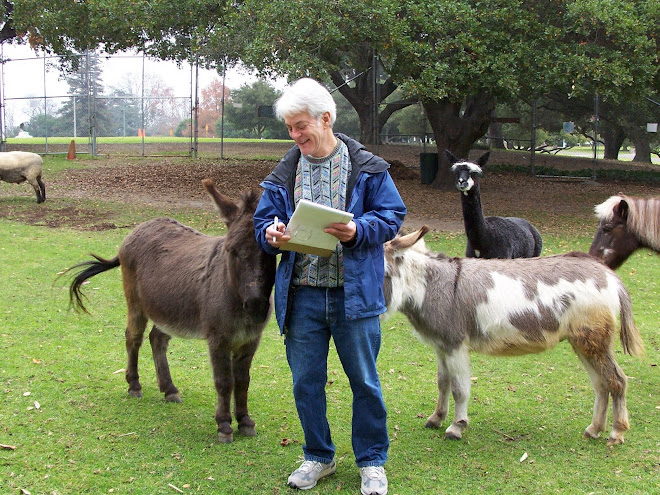
Interviewing the animals at Children's Fairyland in Oakland. L-R: Bobo the sheep, Gideon the miniature donkey, me, Tumbleweed Tommy the miniature donkey, Juan the alpaca, Coco the pony

Saturday, August 9, 2014

Ar-r-r-r-r!

                                             (Above: Ben Brady as the Pirate King)

I suppose I shouldn't be have been surprised by how much fun The Lamplighters' sparkling new production of Gilbert & Sullivan's "The Pirates of Penzance" was when I saw it last weekend at the Lesher Theater in Walnut Creek.
After all "The Pirates" is probably G&S's funniest operetta, boasting some of their most hummable tunes, including "Poor Wandering One," "With Cat-like Tread" (whose tune was stolen for "Hail, Hail, The Gang's All Here") and that perennial show-stopper, "A Policeman's Lot Is Not A Happy One."
Besides, The Lamplighters are the world's best G&S troupe. That distinction used to belong to the D'Oyly Carte Opera Company, which was founded by Gilbert and Sullivan themselves. But, alas, D'Oyly Carte went belly-up in 1982, and since then The Lamplighters have been the class of the field.
But I was still taken aback by how much sheer pleasure they managed to cram into three hours. Kudos to the leads, particularly Chris Uzelac as Samuel, Sonia Gariaeff as Ruth and, especially, Ben Bradey as the Pirate King.
With his strong voice, commanding presence and impeccable comic timing, this young man – he's only 23 – bestrides the stage like no Pirate King I've seen since Kevin Kline. He's going to be a big star.
And all praises to the great Lawrence Ewing, who has played the Major General so many times he practically owns the part, but he has never played it the same way twice.
But the best thing in the show was the chorus, who are usually overlooked in theater reviews. The chorus has always been one of the Lamplighters' strong suits, but this time they took it to a whole new level.
Which means the real stars are the stage director, Jane Erwin Hammett, and the music director/conductor, Baker "Little Bo" Peeples, one of the finest conductors in the Bay Area.
Under his baton, the orchestra was tighter than the Rolling Stones, and the chorus's harmonies were tighter than the Beach Boys. It was exquisitely beautiful, especially when they sang "Hail, Poetry." Ahhh! It doesn't get any better than that.
As for Hammett, I won't spoil it for you by revealing the many hilarious bits of stage business she gave the actors to do, but trust me: You're in for a rollicking good time.
The Lamplighters have evolved over the years as they keep improving the product. Today, most of them are professional opera singers.
But a few are throwbacks to the old days - extremely talented amateurs such as Steve Goodman, who played the Sergeant of Police (and very nicely, too). His day job is professor of medicine and associate dean at Stanford.
Finally, I was especially heartened by the large number of kids in the audience, and they seemed to be having a great time, too. After the final encore, Ewing stepped to the edge of the stage and addressed them directly.
"You are the audience of the future, " he told them, "and the performers of the future, too."
"The Pirates of Penzance" has finished its run in Walnut Creek, but you can see it August 14-17 at the Yerba Buena Center of the Arts in San Francisco, just a short walk from the Montgomery Street BART station. Catch it if you can.

A Store For All Seasons

I've been getting anxious phone calls from people all over Berkeley because of rumors that Berkeley Hardware, one of the most beloved stores in the city, is going out of business just a year short of its 120th birthday.
Relax, folks. Berkeley Hardware isn't going anywhere.
Actually, I take that back. It is going somewhere. The landlord has decided to develop the space as a five-story apartment building, so the store will have to move.
"We're looking for another spot in downtown Berkeley, preferably with parking," says Virginia Carpenter, whose family has owned the store since 1945. "We want to continue to serve Berkeley for another 120 years."
I'd better explain why people are taking this so personally. First, it's just a terrific store – one of those old time hardware stores that always have whatever you're looking for, no matter how obscure.
Then there's the longtime manager, Quentin Moore, a man whose sunny disposition makes Santa Claus look like The Grinch. And the other employees take their cue from him. They're all friendly and helpful, and the customers think of themselves as part of an extended family.
But it's also a symbol of a larger issue. For years, Berkeleyans have watched in dismay as the mom & pop stores that made Berkeley so Berkeley disappeared one by one: Edy's, where we ate Sundaes after movies on Saturday nights; Wilkinson's, where we munched waffles on Sunday mornings; the Blue & Gold Market; Bolfing's Elmwood Hardware; Radston's Office Supply; Cody's Books – the casualty list goes on and on.
Berkeley Hardware is one of the last survivors, along with the Darling Flower Shop and Moe's Books. It's now the oldest store in the city.
When it was founded in 1895, Grover Cleveland was president. Cars, planes, radio, TV, movies, computers, smart phones – none of them had been invented yet.
"But our inventory really hasn't changed much," says Virginia. "You still need a hammer, still need a nail, still need a knife to cut your meat with."
The heart and soul of the store, from 1945 to his death in 1997, was Virginia's father, Charles Judy, the most respected man in town.
"There was nothing phony about Charlie," an old-timer told me. "He was the most honest man I ever met. A shake of his hand was better than any contract."
Every day, he brought his dog, Rhoda, a tiny mutt with enormous ears, to work with him. Rhoda would take up her station at the top of the stairs leading up to the electrical department and, with great dignity, survey her realm like the monarch she was.
"When she was here, we knew he was here," says Moore. "Man, he loved that little dog!"
One Christmas Eve, Judy got a frantic phone call from a man who had bought a model train for his child. A part was missing. It was well past midnight, but Judy got out of his bed, met the man at the store, and gave him the part so his child wouldn't be disappointed on Christmas morning.
"That's the kind of guy he was," says Virginia. "We still try to do that today, if we can."
If you hear of a good spot available in downtown Berkeley, send Virginia and her husband Bill an email at berkeleyace@berkeleyace.com/

Wednesday, July 23, 2014

Think Global, Donate Local


Have you seen those heartbreaking commercials for the ASPCA (short for American Society For The Prevention Of Cruelty To Animals) featuring pictures of abandoned cats and dogs as Sarah McLachlan sings "In The Arms of An Angel?" Makes you want to whip out that checkbook and send them a donation, doesn't it?
Well, go ahead. It's a very worthy organization. But if you think any of that money is going to filter down to local animals, think again.
That's because the ASPCA, despite the "American" in its title, is simply the New York society. It gets to put "American" before the name because it was the first SPCA in the country. It is not – repeat, not – an umbrella organization for SPCAs all over the country, including the East Bay SPCA.
If you send the ASPCA a donation you'll be helping some very deserving cats and dogs in New York. But if you want your dough to go to animals closer to home, you'll have to contribute to a local organization.
Same for the HSUS, the Humane Society Of The United States. It's a lobbying organization in Washington. DC, that operates no shelters of its own. And it has no – repeat, no – connection to humane societies across the country that do operate shelters, such as the Berkeley Humane Society. Again, if you want your money to do some good here, you'll have to contribute directly to a local organization.
So what's the difference between an SPCA and a humane society? Answer: nothing. They're both private adoption agencies for homeless cats and dogs that cooperate closely with their respective city shelters.
They are supplemented by local rescue groups, such as Island Cat Resources & Adoption, Fix Our Ferals, Hopalong, Muttville, Home At Last, Furry Friends Rescue, Community Concerned For Cats, Rocket Dog Rescue, San Francisco Bay Area Dog Rescue, and Adopt A Dog, as well as breed-specific dog and cat rescue groups. These organizations deserve our support, too.
                                          * * *
 Finally, a fond farewell to James Garner, television's first anti-hero. In an era when westerns dominated the airwaves and every other actor was trying to be John Wayne lite, his character, Brett Maverick, was a charming rogue who did everything he could to avoid getting into a fistfight, let alone a shootout. In the stolid, button-down 1950s, that was a breath of fresh air.
 I still remember the dilemma I faced every Sunday night: Should I watch "Maverick" on ABC or Ed Sullivan on CBS?
Solution: I tuned in to the first 30 seconds of" Maverick" to see if that week's episode was going to be about Brett (Garner) or his brother Bart (Jack Kelly). If it was Brett, I watched "Maverick." If it was Bart, I would groan and immediately switch over to Sullivan.
Garner played variations on that character for the rest of his career, most notably on "The Rockford Files" and in two World War II movies – "The Great Escape," in which he played the scrounger, of course, and "The Americanization of Emily, which paired him hilariously with Julie Andrews at her earnest do-gooder best.
He was also one of the greatest Raiders fans of all time. I can't remember a game during the team's heyday in the 1970s when he wasn't on the sidelines cheering them on.

Remembering the Earl of Berkeley

The Earl of Berkeley has died.
That's the nickname a sportswriter for the old Berkeley Gazette gave Earl Robinson when he was a multi-sport star at Berkeley High in the early 1950s.
But Robbie, as his friends called him, was a Berkeley legend long before he got to high school. Growing up in West Berkeley in the late 1940s, he was the best sandlot player at San Pablo Park, where he earned a reputation for protecting smaller children from bullies.
After high school he moved on to Cal, where, as captain of the basketball team, he led the Bears to conference titles in 1956, '57 and '58. He was named to the All-Coast team twice and the all-conference team three times.
But to him, those accolades paled compared to the Most Inspirational Player award his teammates voted him in senior year. Joe Kapp, who played on both the football and basketball team, said, "Robbie was like our older brother."
Guard Denny Fitzpatrick adds, "I got off to a slow start one year. Robbie took me aside and said, 'Look, Denny. You can play in this league; you just have to look for your shots.' That really turned it around for me, and I ended up having a pretty good year. He was clearly our leader. Everybody looked up to him."
But as good as he was at hoops, he was even better on the baseball diamond. In 1957 he batted .352 and led the Bears to the NCAA championship.
After graduating in 1958 he played for the Dodgers and Orioles for seven years. Then he embarked on his true vocation as a teacher - first at Cal as assistant basketball coach, then at Merritt College as the first African American head coach in the California junior college system. He later moved to Laney College, then returned to Cal as freshman basketball coach.
He made a real difference in the lives of countless younger athletes, including Rickey Henderson, whose acceptance speech he helped write for the baseball Hall of Fame induction ceremony.
He later taught speech and communications at Castlemont High, worked with the Oakland A's as director of special projects, was vice president of the Oakland Zoo's board of trustees, and served on the Alameda County Grand Jury and the board of directors of the Cal Alumni Association, South Berkeley YMCA, Oakland Police Athletic Association YMCA, and the Oakland Boys and Girls Club.
Last fall he was diagnosed with end-stage heart failure, but with his Medicare hospice coverage running out, there was no way to pay his mounting bills.
So his teammates passed the hat and raised the money. To a man, they said it was payback for everything he had done for them.
Robbie met his death the same way he lived his life: with dignity.
"I'm not sad," he said. "My doctors have been straight up with me. I'm probably dying. I'm not ready to give it up yet; but when I do, I'm cool with that."
He died peacefully on July 4, full of love and gratitude. His best friend, Pete Domoto, a guard on the 1958 football team, emailed Robbie's teammates, "Earl died on Independence Day. He soars with the eagles. We will keep him close to our hearts."
It was a classy exit for a classy man.

Sunday, July 6, 2014

Food From The Heart

(Last year's Community Faire. Photo by Mike Rosati Photography)

One day last month, Mary (not her real name, to protect her privacy), was delivering meals as a volunteer with Alameda Meals On Wheels when she knocked on the door of one of her clients, a 98-year-old man who lives alone.
No answer. So she knocked again. Still no answer.
She was on a tight schedule, with many more clients to visit. But she knew his routine, and she knew that if he wasn't answering the door, something must be wrong. So instead of moving on, she called the police.
They came out and broke down the door, and they found him lying unconscious on the floor. They rushed him to the hospital, where he made a complete recovery; and now he's back at home, still getting daily meal deliveries from Mary.
"If it hadn't been for her, he would have died," said one of the cops.
All in a day's work for a Meals On Wheels volunteer. "We pride ourselves on doing a daily check on our people," says Rosemary Reilly, director of the program. "It's important for them to have a hot meal every day, but the psychological factor is sweet, too. They know we're coming to their door every day, and we're often the only people they'll see all day."
Ten years ago, Alameda Meals On Wheels created a second program called Friendly Visitors to supplement the daily meal drop-offs with once-a-week visits that last at least two hours, and often much longer.
"My visitor is so loving and sweet," says one client. "She calls and checks in between visits. Sometimes we go to lunch or shopping when she comes. There are times I don’t see people for days, so I love to see her."
It's hard to think of a program that provides such an important service to such deserving people with so little overhead.
Alameda Meals on Wheels is a locally-funded, seven-day-a-week program that has been delivering hot, nourishing meals to Alameda residents for 40 years. Each day, holidays included, its cheerful and caring volunteers deliver a mid-day meal to more than 140 Alameda residents of all ages.
The only obstacle is that providing good food to 140 people costs money, and AMOW runs a shortfall of about $16,000 every month.
To make up the slack, it turns to the public. The big fundraiser is the annual Community Faire & Wine Tasting, which will be held this year on July 20 at the Rock Wall Wine Company on Monarch Street.
Fifteen restaurants and several wineries in Alameda will be serving gourmet food and drink. As always, Tucker's Ice Cream will be serving ice cream in the children's play area, and music will be provided by the big band Three O'Clock Jump. All involved are donating their services for free.
 "Alameda is a very caring community," says Reilly.
If you can't make the party, you can still contribute online at alamedmealsonwheels.org or by sending a check to P.O. Box 2534, Alameda CA 94501.
If you'd like to be a meal deliverer, call 510-865-6131; and if you'd like to be a Friendly Visitor, call 510-748-0342.
This is AMOW's 40th anniversary, and I hope they last 400 years more. And there are Meals On Wheels programs in other local cities that deserve your support, too.

Sunday, June 29, 2014

The Glorious Fourth

Twenty score and 18 years ago our fathers brought forth on this continent a new nation, conceived in liberty and dedicated to the proposition that all men are created equal.
They knew the odds against them. They were taking on the greatest superpower on the world, the British Empire.
And they knew that if they lost, they would be hanged as traitors – if they were lucky. The standard punishment for treason in those days was drawing and quartering, the same torture Mel Gibson's character suffered at the end of "Braveheart."
The largest signature on the Declaration was John Hancock's, who exclaimed, "There! Now King George can read it without his spectacles!" Then he gave a little pep talk to his colleagues, saying, "We must be unanimous. There must be no pulling different ways. We must all hang together."
"Yes," cracked Benjamin Franklin. "We must hang together, or we will be pretty sure to hang separately."
Not only their lives, but their property was at risk, too. As traitors, all their goods would be forfeit to the Crown, turning their children into paupers.
But against all odds they won the war, so none of them were executed, although a few were killed in battle. But many of them still suffered grievously.
Josiah Bartlett of New Hampshire – yes, that's where "The West Wing" got the name – saw his house burned to the ground by Loyalist arsonists.
William Floyd of New York was forced to flee with his family to the Connecticut woods, where his wife died a few months later from exposure and stress. When he and his children were finally able to return home two years later, they found their fields and timber stripped, their fences destroyed, and their home ransacked and burned.
Another New Yorker, Philip Livingston, lost both of his homes to the invading British, who turned one into barracks and stables and the other into a Royal Navy hospital. By the time he returned after the war, they were unfit for human habitation.
William Hooper of North Carolina lost his home and property, forcing his family to wander the countryside, destitute as well as homeless. It was ten months before he was able to find them again.
Richard Stockton of New Jersey and George Watson of Georgia were captured and imprisoned in horribly unhealthy conditions. When Stockton was finally released he returned to find his home destroyed. He died a broken man less than two years later.
All told, one percent of the American population died during the war. If the United States were to lose one percent of its population today, the toll would be 2.5 million dead.
So as we celebrate the Declaration, we have to look in the mirror and ask ourselves: Are we worthy of the sacrifice they made? Or are we throwing it all away?
We now live in a country that is divided almost 50-50, with each side convinced that the other side is not only wrong, but downright evil. Some Americans hate other Americans more than they love their county. As Yeats said, the worst are full of passionate intensity.
We are the most powerful military superpower the world has ever seen, and I've never felt weaker. Al Qaeda may not be capable of bringing us down, but we are.

Wall-To-Wall Mozart

                                         (Above: Maestro Cleve)

One day 40 years ago, Maestro George Cleve and a few of his musician friends were kicking back with a few beers during a break from rehearsals for the San Francisco Spring Opera's production of Mozart's "The Abduction From The Seraglio."
"This really is the best music, isn't it?" said one.
"Yeah," said another. "Wouldn't it be great if we could play nothing but Mozart?"
"Let's have an all-Mozart festival!" said a third.
"Well," said Cleve, "I'm not very good at organizing these things, but if you organize it and want me to conduct it, let me know."
And that was the end of that – or so he thought. But a couple of months later they called him and said, "OK, it's organized."
Thus was born the Midsummer Mozart Festival, the only all-Mozart festival in North America. There are a lot of "Mostly Mozart" festivals, but this is the only one that's all Mozart, all the time.
That first year, the musicians split the proceeds among themselves. It came to about ten bucks apiece.
This year, as the festival celebrates its 40th birthday, it has grown to the point were the musicians are paid union scale.
But to tell the truth, they're not in it for the money. They're in it for the Mozart.
"He's the best," says violinist Robin Hansen, who is celebrating an anniversary of her own – her 20th year as the orchestra's concertmaster. "No one else can delight your senses while at the same time touching the deepest places in your heart. I often find myself with a smile on my face and a tear in my eye, both at the same time. He's so much fun to play!"
And to listen to. You can't ask for anything more fun than the overtures to "The Marriage of Figaro" and "The Abduction From The Seraglio." Or more majestic than the great Symphony No. 40 in G minor. Or more delightful than the Divertimento for flute, oboe, bassoon, four horns and strings, which he wrote when he was only 16.
All these, and a lot more, will be featured at this year's festival, which will run from July 20 to 27 with two completely different programs.
The first concert - July 20 at Stanford's Bing Concert Hall and July 21 at First Congregational Church in Berkeley – will feature the 40th Symphony, the overture to "Figaro," and two arias sung by mezzo-soprano Tania Mandzy.
The second concert – July 25 at St. Marks's Lutheran Church in San Francisco, July 26 at First Congregational Church in Berkeley and July 27 at Bing Concert Hall at Stanford – will feature Seymour Lipkin playing the Piano Concerto in D Minor, mezzo-soprano Anna Yelizarova singing "Parto, parto" from "La Clemenza di Tito," and the San Francisco Boys Chorus singing the delightful Spatzen Mass ("Sparrow Mass").
All the performers are world-class musicians, but the real draw is Cleve himself.
"Definitely the highlight of my career is playing Mozart with George," says Hansen. "I've been fortunate enough to work with Leonard Bernstein, Herbert Blomstedt, Zubin Mehta and Michael Tilson Thomas. George is one of those musical giants. You're very lucky if you get to work with someone of his caliber in your musical career."
You can find a complete playlist at midsummermozart.org and order tickets at 800-838-3006, x1.