A columnist of heart and mind

A columnist of heart and mind
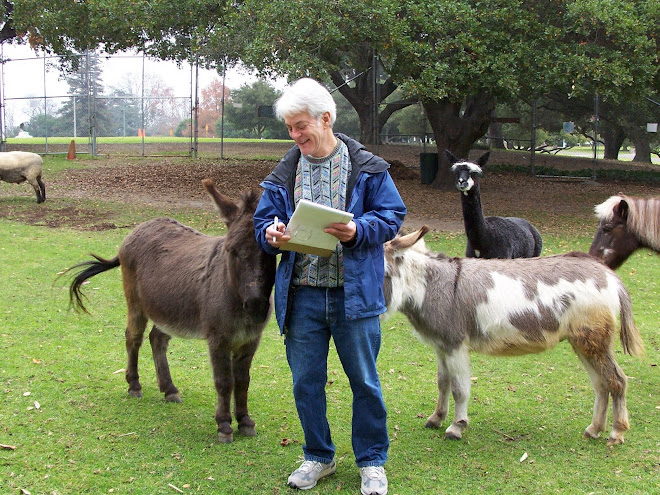
Interviewing the animals at Children's Fairyland in Oakland. L-R: Bobo the sheep, Gideon the miniature donkey, me, Tumbleweed Tommy the miniature donkey, Juan the alpaca, Coco the pony

Wednesday, October 12, 2011

The Fire Last Time


On Oct. 19, 1991, I was at the Marines Memorial Club in San Francisco attending a banquet honoring Sam Richards, a 90-year-old Marine aviator who fought in World War I.
He wanted to fight in World War II, too, but the Marines wouldn't let him re-enlist because he was too old. So he joined the Army and became Eleanor Roosevelt's personal pilot, flying her from island to island in the South Pacific to visit the troops.
On the day World War I ended, he and his buddies formed a Last Man's Club. They bought an expensive bottle of French wine and agreed that the last man alive would open it and drink a toast to the others.
The last man turned out to be Richards. That night at the Marines Memorial Club he opened the bottle and let everyone in the room have a sip.
The next morning, his home was burned to the ground by the Oakland Hills firestorm, destroying all the souvenirs of his remarkable life.
Richards was one of thousand of victims of the fire, which killed 25 people, injured hundreds of others and destroyed more than 4,000 homes
Many survivors never went back. "I can rebuild my house, but I can't rebuild my neighborhood," one explained to me. "That's gone forever."
But there were a few miraculous escapes. The nuns at Holy Names College, which was directly in the path of the flames, prayed to the founder of their order, Mother Marie Rose Durocher, to save the school.
You may or may not believe in the power of prayer, but the fact remains: Holy Names was saved, even though the surrounding area was completely devastated.
Then there was Dudley the dog. He was a 10-year-old German shepherd mix owned by Virginia Smith, one of the 25 people who died that terrible day. When firefighters found Dudley in the ruins of Smith's home on Charing Cross Road, he was huddled next to her body.
All four paws were horribly burned, but he wouldn't leave her side. They literally had to drag him away.
Dudley was rushed to Berkeley Dog & Cat Hospital, where Dr. Alan Shriro lovingly treated his burns. But he barely moved. He barely ate. He'd lost the will to live.
Meanwhile, hospital staffers were frantically trying to locate Smith's husband, Stanley, who wasn't home when the fire struck.
Finally, after days of searching, they found him. He was staying with his brother in San Leandro.
"I'll be right there!" he said.
It normally takes at least a half-hour to drive from San Leandro to Berkeley. He made it in 15 minutes.
Dudley was in the back room. But as soon as he got a whiff of his dad's scent, he started crying louder than you've ever heard a dog cry in your life.
"We brought him out, and he went wild with joy," says Shriro. "He started jumping up and down and howling and wagging his tail like crazy. Mr. Smith started crying. Then everyone in the waiting room started crying. And so did I."
But these were rare exceptions. The firestorm was an unqualified disaster, even worse than the Loma Prieta earthquake, which was plenty bad enough.
I told myself, "I will never experience anything as horrible as this again."
Then came 9/11.

Sunday, October 2, 2011

Mary Had A Little Lamb


(Above: Twinkle. Photo courtesy of Children's Fairyland)

Sad faces at Children's Fairyland: Twinkle the sheep died on Sept. 20, and everyone - from Juan the alpaca to Puddles the duck - misses her terribly.
Twinkle was only three and a half when she died, which makes her an anomaly at Fairyland, where the animals usually live way, way beyond their normal life expectancies because of all the TLC.
But poor Twinkle was afflicted by a congenital defect called megaesophagus, which causes bloat, a painful and deadly condition in sheep. For months, the staffers at Fairyland strove heroically to keep her alive, especially animal caregiver Deborah Ramirez, who logged countless hours - often off the clock - comforting her.
But her suffering finally became so acute that they reluctantly decided to have her humanely euthanized. Ramirez was holding her in her arms when she died.
From the moment she arrived at Fairyland in 2008, Twinkle stole everyone's heart. She loved people, especially Ramirez, whom she would follow around all day like Mary and her little lamb.
And she was absolutely wonderful with the kids. She had been rejected by her own mother, and there was something about her that made you think that she somehow knew what it was like to be lonely. Her greatest joy in the world was giving and receiving love from the park's pint-sized patrons.
Twinkle was a Suffolk sheep, and it turns out that breed is especially susceptible to the condition that killed her. So no more Suffolks for Fairyland.
Instead, Ramirez has found a breeder named Jamie Peyton, owner of Elysian Oaks Farm in Winters, who raises a different breed called Babydoll sheep, which are especially resistant to megaesophagus.
And they have a couple of other advantages. They're called Babydolls for a good reason: They never get taller than 24 inches, which means they'll look like lambs for their whole lives.
They'll act like lambs, too. Five of the ewes - Mary, Melonie, Monique, Butterfly and Leia - are pregnant, and they're due to deliver this winter.
"Lambs that are born in cold weather are more gentle, loving and sweet," says Ramirez. "They like to snuggle more, and they get more hands-on treatment from their keepers than lambs born in the summer, who roam outside from a very young age."
Fairyland's new lamb won't be available for adoption until spring, which is just as well because it'll probably take Fairyland that long to pay off Twinkle's medical bills.
Some might wonder why Fairyland, which runs on the tightest of budgets - made even tighter last year by the City of Oakland slashing its contribution by 25 percent - would shell out so much cash on a hopeless cause.
The answer is simple: It's the moral thing to do.
"For the animals, this park is their home," says executive director C.J. Hirschfield. "They live here 24/7. We’re just visitors."
Besides, it's the way the little children - who are, after all, the people to whom Fairyland is ultimately responsible - would want it.
After Jewel the cat died last March, Fairyland set up a fund for unanticipated emergencies like this.
If you, or a child you love, have ever been charmed by Twinkle or one of the other animals at Fairyland, now's the time to say thanks by sending a tax-deductible contribution to Children's Fairyland, 699 Bellevue Ave., Oakland CA 94610.

Monday, September 26, 2011

All That Jazz


The wonderful vocal jazz quartet The Manhattan Transfer will give an all-too-infrequent Bay Area performance this Saturday at a garden party in concert promoter Danny Scher's backyard in Kensington. It's a benefit for the Jazzschool in Berkeley.
"We're doing this concert simply because we believe the Jazzschool is a much-needed musical institution, and we want to make sure it sticks around," says singer Janis Siegel. "The Manhattan Transfer is proud to help in any way we can, and we are looking forward to singing at our old friend Danny's home to aid the cause."
The tickets aren't cheap - $175, most of it tax-deductible - but if you dig the elegant sangfroid with which they swing the classics as much as I do, this is a rare opportunity to hear them up close and personal.
Besides, as she said, it's for a great cause. The Jazzschool is one of most comprehensive schools for jazz, blues, funk, rock, gospel, R&B, Brazilian, world and Afro-Caribbean in the country, offering vocalists and instrumentalists at all ages and skill levels a broad spectrum of performance classes, lectures and workshops ranging from "Exploring the Bebop Scale" to "Personal Financial Planning for Musicians."
It offers two distinct educational programs - the Community Music School, which includes the Adult Music Program and the Young Musicians Program; and the Jazzschool Institute, an academic degree program offering a B.Mus. in jazz studies.
"Although I've never run this analogy by Alice Waters, I like to compare the community music school, where students take classes on an a la carte basis, to the café upstairs at Chez Panisse, and the degree program, where students participate in a program of study, to the fixed-price restaurant downstairs. Either way, they're sure to get a fabulous meal!" says Jazzschool founder and director Susan Muscarella.
Nestled in the basement of the old Kress five-and-dime store on Addison Street, next to the Aurora Theater and Berkeley Rep, the Jazzschool is a little bit of Greenwich Village in the middle of downtown Berkeley.
Among its features: a café, book & CD store, photo gallery, guitar repair shop, and 12 practice rooms with no 90-degree angles.
"That's important because parallel walls aren't good for acoustics," Muscarella explains. "Also, I think being in the basement is cool for jazz."
On one wall of the main hall - Hardymon Hall, named after the late Phil Hardymon, who founded the award-winning jazz program at Berkeley High - hangs a huge, hammered-steel sculpture that replicates, note-for-note, Charlie Parker's "Yardbird Suite," which he composed as a tribute to Stravinksy's "Firebird Suite."
The Manhattan Transfer concert begins at 7 p.m. For tickets and directions, visit www.jazzschool.org or call 510-845-5373. And remember: It's outdoors, so dress warmly.
* * *
Finally, we're in the middle of the Jewish High Holy Days, which began Wednesday night with Rosh Hashanah, the Jewish New Year, and ends next Saturday with Yom Kippur, the day Sandy Koufax refused to pitch the first game of the 1965 World Series.
At this time of year it's customary for Jews to seek out whomever they have offended during the prior 12 months and ask forgiveness. So let me apologize to everyone this column has offended in the past year. I'll try to do better next year.
Happy 5772!

Monday, September 19, 2011

Swingin' Sisters


Ellen Seeling is a woman on a mission. Actually, three missions.
First, she wants to keep playing jazz, the music she has loved since she was a little girl listening to her father's Count Basie and Stan Kenton records.
Second, she wants to take jazz out of the musty, rarefied atmosphere of the academy and put it back where it belongs: on the dance floor.
"A lot of bands take dance gigs and then they play all this obscure stuff that nobody can dance to," she says. "Then they wonder why the audience for jazz is shrinking. Well, duh!"
Last but not least, she wants to end the historic gender discrimination in jazz, which has relegated female instrumentalists to second-class status. (Female vocalists are another story; there have always been opportunities for them.)
It was for all these reasons that Seeling - a virtuoso trumpet player who has played with Slide Hampton, Phoebe Snow and the Thad Jones/Mel Lewis Orchestra, among others - founded the Montclair Women's Big Band in 1998 and the Girls' Jazz and Blues Camp in 2009.
"Women are being denied the professional experience they need," she says. "They don't get a chance to play with people who are better than them, so they have to do it all on their own. It's daunting. It's crushing, actually."
Currently, she leading a boycott of this year's San Francisco Jazz Festival, which features only two female instrumentalists among its more than 35 headlining acts.
(For the record, festival spokesman Marshall Lamm denies any bias, saying, "For nearly 30 years, SFJAZZ has presented many of the most illustrious women in and will continue to do so moving forward. SFJAZZ Education provides extensive outreach and guidance to young female musicians, and the SFJAZZ High School All-Stars has included young female musicians in the band since its inception.")
Seeling says women start bumping up against barriers when they're still little girls.
"I wanted to play the trumpet, but the music teacher told my mother, 'The trumpet is not a good instrument for girls. She'll have deformed lips, and boy's don't like that.' Thank God, my mother said, 'I don't care. Give her a trumpet anyway.'"
The Montclair Women's Big Band has been a success from the start. Music critics strained for superlatives to describe them, including Larry Kelp, who wrote, "See this band and then scratch your head wondering why it hasn't been featured at the big jazz festivals."
But their greatest endorsement came at their very first gig, when the audience paid them the supreme compliment: They got down on the floor and started dancing.
"It was such a rush!" says Seeling. "The band members were thrilled in spite of themselves. Being jazz musicians, they tried to be cool, but I could tell they were excited."
Being a pioneer isn't easy. Seeling has had more than her share of sneers and hate mail.
But times are changing. The band's solo trombonist, Sarah Cline, has been named the first female director of the award-winning Berkeley High School jazz program.
The band's next gigs are at the Women of Taste event at Kaiser Rooftop Gardens in Oakland on Oct. 1; at the Oakland Suffrage Parade, celebrating the 100th anniversary of women gaining the right to vote in California, at Lake Merritt on Oct. 2; and at Yoshi's on Nov. 27.

Tuesday, September 13, 2011

Shoulder To Shoulder


Hard as it is to believe, women have had the right to vote for less than 100 years. The 19th Amendment to the Constitution wasn't ratified until 1920.
But our state was ahead of the nation by almost a decade. On Nov. 10, 1911, California voters passed a ballot measure granting voting rights to women.
Most of the "no" votes came from San Francisco and Alameda counties, due to a lavishly funded campaign by the Liquor Dealers League.
They were afraid that women would vote for prohibition, which was a feminist issue because many men were getting drunk and beating their wives or abandoning their children.
And they pulled out all the stops. There's a new exhibit at Cal's Bancroft Library showcasing the "no" campaign's propaganda leaflets, including one that warned men that if they voted "yes," they would come home one day to find their dinners uncooked and their children dirty because their wives were elsewhere, hanging out with 11 strange men.
In other words, they would be serving jury duty!
It was one of the closest - and crookedest - elections ever. More than 3,000 phony ballots were discovered in San Francisco alone. On election night, the San Francisco papers unanimously declared the ballot measure was defeated.
But over the next few days, as the results from Southern California and the rural areas trickled in, the margin kept narrowing until votes for women finally won by 3,587 votes.
The only city in Alameda County to vote "yes" was Berkeley, thanks to a small army of volunteers - ranging from wealthy matrons to Cal coeds - led by Hester Harland.
Holding strategy sessions called "Pink Teas" (so called because the name sounded like a harmless social event, not a political meeting, thus avoiding conflict with their anti-suffrage husbands), they fanned out over the city, buttonholed the voters one-by-one, and filled every available meeting place in the city with public speakers.
"The newspapers didn’t want to cover them," says Harland's great-granddaughter, Colleen Kelly. "So she and her staff would take huge bells and toll them as they walked along the street, shouting information about the next suffrage meeting."
The campaign climaxed with a huge parade on election night, led, in Harland's words, by "a tally-ho filled with musicians and young women carrying banners and legends," ending in a rally in the Berkeley High School auditorium.
But Harland wasn't there. Exhausted by overwork, she suffered a nervous breakdown a week before the election and missed the celebration.
But her triumph endures. And this Sunday, to celebrate the 100th anniversary of women's suffrage in California, the Berkeley Historical Society will unveil a new exhibit titled "Berkeley Women Vote: Celebrating California Suffrage 1911-2011" in the Berkeley Veterans Building.
The guest of honor will be Colleen Kelly. Another of Harland's great-granddaughters, Jane Frederick, contributed some of Harland's personal items to the exhibit.
This year is also the 100th anniversary of the Berkeley League of Women Voters - founded shortly after the 1911 election "to follow up the recent victory of Women's Suffrage in California with effective civic work." The League will observe its centennial on Oct. 30 with a celebration in the Berkeley City Council chamber.
Happy double anniversary to all. It wasn't the first time that our country was made better by letting more people in under the tent, and I hope it won't be the last.

Saturday, September 10, 2011

Happy Ending


(Left: Alexia. Right: Rosco. Photo by Miguel Buchwald.)

For Rosco the puppy, last Friday was the second-best day of his life, second only to the day five months ago when he was adopted by Kate McFarland of Oakland and her parents, Rick and Carolyn.
Rosco, a 7-month-old, brown-and-white fluffball with a black button nose and two coal black eyes, was playing with his favorite squeaky toy when the doorbell rang.
In walked his sister Alexia, whom he hadn't seen since they both survived a medical ordeal that shouldn't happen to, well, a dog.
Both dogs jumped for joy. He chased her around the room. Then she chased him around the room. Then they rolled around together and wrestled. Then, totally bushed, they flopped down and curled up together for about five minutes. Then they jumped up and started the whole routine all over again.
This continued non-stop for more than three hours. The puppies were in ecstasy. And so were their owners, watching them.
"When I think of how close both of them came to dying, it's a joy to see them so happy and healthy," said Sandy Buchwald of Vallejo who, with her husband Miguel, adopted Alexia.
Rosco and Alexia were part of a litter that were rescued last March by Paw Prints Rescue in Yuba City after they were abandoned by their mother. The two puppies were so devoted to each other, the staffers at Paw Prints dubbed them "The Twins."
Roscoe was adopted by the McFarlands after they saw his picture online and were instantly smitten. Ditto for Alexia and the Buchwalds. They were headed for happy homes, but it was doubtful that they would ever see each other again.
But a few days later, Rosco developed severe vomiting and diarrhea. His worried owners rushed him to PETS Referral Center in Berkeley, where Dr. Shea Cox, the veterinarian on duty, diagnosed parvovirus, a highly contagious and potentially lethal disease, especially in puppies.
The next day he was feeling better, so he was sent home to continue his recovery. Two hours after he left, another puppy was brought in with the same symptoms.
It was Alexia, and she was even sicker than Rosco. Pneumonia and anemia set in on top of the parvovirus, and she was soon struggling for her life.
The next day, Rosco's condition started deteriorating again, and he returned to the hospital. It was only then that the McFarlands and Buchwalds finally met. They put two and two together and realized that their puppies were littermates.
Dr. Cox put Rosco and Alexia in side-by-side cages in intensive care, hooked them up to IVs, and worked day and night to keep them alive. By now, they were down to less than three pounds.
"I had to stop the vomiting and diarrhea because they were dying of starvation and thirst," she said. "I gave them anti-emetics, antibiotics, sugar and potassium supplements, and plasma transfusions as a protein source. Plasma contains small proteins - not enough to do a big dog any good, but enough for small dogs like them."
But the best medicine of all was each other.
"It was so comforting knowing that Alexia was no longer alone in the isolation ward," said Sandy Buchwald. "I knew that if either of these puppies ever had a chance of fighting this illness off, it would be now, when they could comfort and support each other."
And she was right. After a week of medical treatment and loads of TLC, the puppies were well enough to return to their respective homes.
But they haven't seen each other since then. Alexia had to be spayed, Rosco had to be neutered, and their owners wanted to take time to let the incisions heal for fear that in their unrestrained joy at seeing each other they might tear their stitches.
That waiting period ended last Friday. By now, Rosco has grown to 15 pounds, and Alexia isn't far behind at 13 pounds. They are the picture of health and high spirits.
While the puppies cavorted, their owners compared notes and were amazed to discover how similar their personalities are.
Both love tummy rubs. Both love to chew flip-flops. Both love to ride in cars. Both like to lick the water from their owners' legs when they emerge from the shower.
Both are voracious chowhounds. Both are addicted to their squeaky toys. And both are utterly devoted to their owners - and each other.
About three hours into this play date the doorbell rang again. It was Dr. Cox, who stopped by to say hi to her former patients.
The puppies exploded with joy at seeing her again, and she wiped more than a few tears from her eyes.
""They made it!" she said. "They really did it! They were so weak when I first met them, they couldn't even lift their heads. And now look at them!"
And will there be more play dates in the future?
"Are you kidding?" says Carolyn McFarland. "After all they've been through together? These dogs will never be apart again!"

Sunday, September 4, 2011

Squandering The Spirit of 9/11


I know this sounds crazy, but I miss 9/11.
It even sounds crazy to me because that was the worst day of my life, and I suspect it was for you, too.
Each of us is haunted by memories of that day and the ones that followed. I will never forget the sad sight of the victims' families placing missing posters at Ground Zero, putting on a brave face and hoping against hope that their loved ones were still alive. I don't miss that.
What I miss is the wave of national unity that swept the county. My first column after the attacks began with the words, "Well, the 2000 election is finally over," and I had high hopes that the bitterness of the Bush/Gore election would be swept away by the realization that, to paraphrase Jefferson, we are all Republicans, we are all Democrats, united by a common dream of a land with liberty and justice for all.
Pretty naïve, huh? It didn't take long for us to get back to normal. And by normal, I mean dysfunctional.
Ronald Reagan used to ask, "Are you better off than you were four years ago?" And by any measure you use, we are worse off than we were in 2001.
Our Bill of Rights, economy, military, schools, infrastructure and international reputation are in tatters. Crucial problems such as immigration, climate change, the decline of the cities, the growing gap between the rich and poor and the pernicious influence of big money on our politics, have been kicked down the road - some, I fear, past the point of no return.
But the worst problem, the one that underlies all the others, is that many Americans hate other Americans more than they love their country.
And they're being egged on by cynical politicians and partisan media figures who tell them over and over to fear their fellow citizens.
The 9/11 tragedy isn't the only anniversary we're observing this year. It's also the 150th anniversary of the beginning of the Civil War and the 70th anniversary of our entry into World War II.
In the first case Americans split apart, and the result was more than 650,000 deaths. In the second case Americans came together, and they saved the world.
Now it's our turn. It's time to decide what kind of country we want to be. We are at a crossroads, and it can go either way.
There are some dangerous tendencies at work in the land. A lot of loose words are being thrown around about secession and "Second Amendment remedies." People are showing up at political rallies with loaded weapons. And some crazies are going even further - witness the attempted assassination of Rep. Gabrielle Giffords.
This kind of reckless talk was common in the years leading up to the Civil War, too. Sure, we don't think it will come to war this time, but that's what people thought in 1860, too.
Lincoln, of course, described it best:
"All dreaded it, all sought to avert it. Both parties deprecated war, but one of them would make war rather than let the nation survive, and the other would accept war rather than let it perish. And the war came."
United we stand, divided we fall.